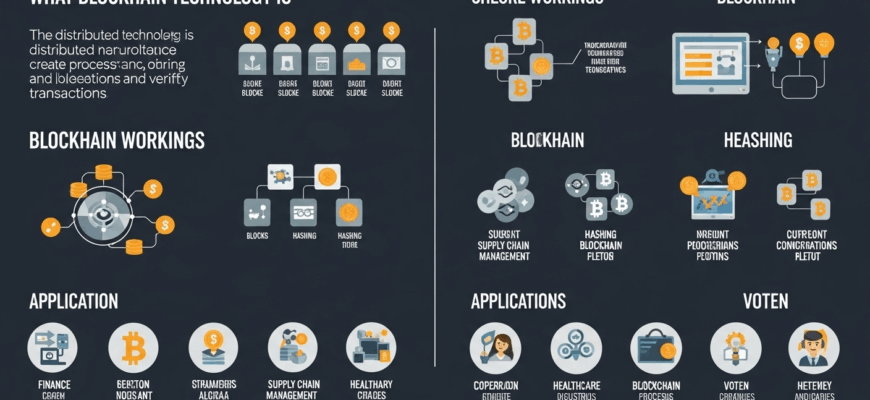
Blockchain Technology Explained: What Is Blockchain and Its Uses
Picture this: You’re sending money to a friend overseas, and instead of waiting days for bank approval and paying hefty fees, the transaction happens instantly with minimal cost—all verified by thousands of computers working together. This isn’t science fiction; it’s blockchain technology in action.
Blockchain represents a revolutionary digital ledger system that’s fundamentally changing how we think about trust, verification, and data storage. Far beyond its original role as the foundation for Bitcoin, blockchain has emerged as a transformative technology with applications spanning from healthcare to voting systems. At its core, blockchain solves a critical problem that has plagued digital systems for decades: how to create trust between parties who don’t know each other, without relying on a central authority.
This article will demystify blockchain technology, explore how it works behind the scenes, and reveal the practical applications that are reshaping industries worldwide. Whether you’re a business professional, student, or simply curious about this revolutionary technology, you’ll discover why blockchain isn’t just another tech buzzword—it’s the foundation for a more transparent, secure, and decentralized digital future.
What Is Blockchain?
Blockchain is fundamentally a shared, unchangeable digital ledger that records transactions across multiple computers in a way that makes them nearly impossible to alter, hack, or delete. Think of it as a digital notebook that’s copied across thousands of computers worldwide, where every entry is verified by the network before being permanently recorded.
Unlike traditional databases controlled by a single entity, blockchain operates on a decentralized network where no single authority has control. This distributed approach means that instead of trusting one institution (like a bank or government agency), the system relies on consensus among network participants to validate and record information.
The technology gets its name from its structure: information is grouped into “blocks” of data, and these blocks are linked together in chronological order to form a “chain”. Each block contains a unique digital fingerprint (called a hash) that connects it to the previous block, creating an unbreakable chain of records that extends back to the very first transaction.
What makes blockchain truly revolutionary is its approach to trust. Traditional systems require intermediaries—banks for financial transactions, notaries for document verification, or government agencies for identity confirmation. Blockchain eliminates this need by using cryptographic proof and network consensus to establish truth. When a majority of the network agrees that a transaction is valid, it becomes part of the permanent record.
How Blockchain Works (Without the Jargon)
Understanding how blockchain operates requires breaking down its key components into digestible concepts that anyone can grasp.
Blocks & Chains: Digital Building Blocks
Imagine blockchain as a series of digital file folders, where each folder (block) contains a collection of verified transactions or data entries. Each folder has three essential components:
Transaction data: The actual information being recorded, whether it’s a financial transfer, a document, or any other type of data
Timestamp: When the transactions occurred, creating a permanent chronological record
Digital fingerprint: A unique code (hash) that identifies the folder and links it to the previous one
These folders are connected in sequence, like a chain of paperclips, where each folder references the unique fingerprint of the one before it. This linking mechanism means that if someone tries to alter information in an earlier folder, the connection would break, immediately alerting the entire network to the attempted tampering.
Decentralization & Validation: Group Agreement in Action
Instead of storing these digital folders in one central location, blockchain distributes identical copies across thousands of computers (called nodes) around the world. When someone wants to add a new folder to the chain, they must first get approval from the majority of these computers.
This validation process works like a global voting system. Network participants (called validators or miners) examine each proposed transaction to ensure it follows the rules. For example, they verify that the sender actually owns the digital assets they’re trying to transfer and that they haven’t already spent them elsewhere. Only when a majority of validators agree that the transaction is legitimate does it get added to the permanent record.
Cryptographic Security: Digital Lock and Key
Blockchain uses advanced mathematical techniques called cryptography to secure data and verify identities without revealing sensitive information. Each user has a pair of digital keys:
Public key: Like a mailing address that others can see and use to send you information or payments
Private key: Like a secret password that only you know, used to prove ownership and authorize transactions
When you want to send a transaction, you use your private key to create a digital signature that proves you authorized it, without actually revealing your private key to anyone. This system ensures that only the rightful owner can access and transfer their digital assets.
The beauty of this approach is that it provides security through mathematics rather than trust in institutions. Even if some network participants are dishonest, the cryptographic proofs and majority consensus ensure that fraud is virtually impossible to execute successfully.
Key Features That Matter
Blockchain technology possesses several fundamental characteristics that distinguish it from traditional data management systems and make it particularly valuable for various applications.
Immutability: Information That Stays Put
Once data is recorded on a blockchain and confirmed by the network, it becomes extremely difficult to alter or delete. This immutability stems from blockchain’s unique linking mechanism—each block contains a cryptographic hash that depends on the content of the previous block. Attempting to change information in an earlier block would require recalculating all subsequent blocks and gaining control of the majority of the network, making tampering computationally impractical and economically prohibitive.
This characteristic proves invaluable for applications requiring permanent records, such as medical histories, academic credentials, or legal documents. The immutable nature ensures that critical information cannot be silently modified, providing a reliable audit trail for regulatory compliance and forensic analysis.
Transparency: Verifiable Truth
Blockchain networks provide unprecedented transparency while maintaining privacy through clever design. All transactions are visible to network participants, allowing anyone to verify the legitimacy of recorded information without revealing sensitive personal details. Public blockchain networks maintain complete transaction histories that can be audited by anyone, creating accountability that was previously impossible with traditional systems.
This transparency extends beyond simple visibility—it includes verifiable authenticity. Every transaction includes cryptographic proofs that allow independent verification without requiring trust in the recording party. This feature makes blockchain particularly valuable for supply chain tracking, where consumers can verify the origin and journey of products from manufacturer to store shelf.
Decentralization: No Single Point of Control
Unlike traditional systems where a central authority controls data access and validation, blockchain distributes these responsibilities across a network of participants. This decentralized approach eliminates single points of failure and reduces the risk of system-wide manipulation or censorship.
Decentralization manifests in several important ways:
Geographic distribution: Network nodes operate across different countries and jurisdictions, making the system resistant to local interference or control
Operational independence: No single entity can unilaterally change network rules or halt operations
Economic incentives: Network participants are rewarded for honest behavior and penalized for malicious actions, aligning individual interests with network security
Consensus Mechanisms: Democratic Decision Making
Blockchain networks use sophisticated consensus mechanisms to ensure all participants agree on the current state of the ledger without requiring a central coordinator. These mechanisms have evolved significantly since Bitcoin’s original Proof of Work system.
Proof of Work (PoW) requires network participants to solve computationally intensive puzzles to validate transactions and create new blocks. While secure, this approach consumes significant energy and has limited transaction throughput. Bitcoin’s network processes approximately 3-7 transactions per second using this method.
Proof of Stake (PoS) offers a more energy-efficient alternative where validators are chosen based on their stake in the network rather than computational power. This approach dramatically reduces energy consumption—Ethereum’s transition to PoS reduced its electricity usage by 99.998%—while maintaining security through economic incentives.
Modern consensus mechanisms continue evolving to address scalability and efficiency challenges while preserving the security guarantees that make blockchain valuable for critical applications.
Types of Blockchains
Blockchain technology has evolved into several distinct categories, each designed to serve different needs and use cases, from fully open networks to tightly controlled enterprise systems.
Public Blockchains: Open Access Networks
Public blockchains represent the most decentralized form of the technology, where anyone can participate without permission. Networks like Bitcoin and Ethereum exemplify this model, allowing users worldwide to:
Submit transactions without requiring approval from any central authority
Participate in validation by running network nodes or becoming validators
Access complete transparency with all transaction data publicly viewable
Benefit from maximum security through large, distributed validator networks
Public blockchains excel in applications requiring trustless interaction between unknown parties, such as cryptocurrencies, decentralized finance (DeFi), and global supply chain tracking. However, they face challenges with transaction speed and energy consumption due to their open, consensus-driven nature.
Private and Permissioned Blockchains: Controlled Access
Private blockchains operate under the control of specific organizations, offering blockchain benefits while maintaining traditional access controls. These networks provide:
Restricted participation limited to approved entities
Enhanced privacy with sensitive data visible only to authorized participants
Improved performance through smaller validator sets and optimized consensus mechanisms
Regulatory compliance aligned with existing business and legal frameworks
Financial institutions increasingly adopt private blockchains for applications like interbank settlements, where the benefits of immutable records and cryptographic security are valuable, but public access is inappropriate. For example, Hyperledger Fabric enables private blockchain deployments that integrate with existing enterprise systems while maintaining strict access controls.
Consortium Blockchains: Shared Control Among Partners
Consortium blockchains represent a middle ground, where control is shared among a group of trusted organizations rather than being fully centralized or completely open. This model suits scenarios where multiple independent entities need to collaborate while maintaining some level of control over network operations.
Key characteristics include:
Limited validator set consisting of consortium members
Semi-decentralized governance with decisions made collectively by consortium participants
Enhanced efficiency compared to public networks while maintaining higher decentralization than private systems
Industry-specific optimization tailored to particular sectors or use cases
Consortium blockchains prove particularly valuable in industries like healthcare, where multiple hospitals and insurance companies need to share patient data securely, or in supply chains involving multiple manufacturers, distributors, and retailers.
The choice between blockchain types depends on specific requirements around trust, performance, privacy, and regulatory compliance. Public blockchains maximize decentralization and trustlessness, private blockchains optimize for control and efficiency, while consortium models balance these competing priorities for collaborative environments.
Real-World Applications (Beyond Cryptocurrency)
While blockchain gained fame through Bitcoin, its applications extend far beyond digital currencies, transforming industries through enhanced security, transparency, and efficiency.
Finance: Revolutionizing Traditional Banking
Blockchain technology addresses fundamental challenges in traditional financial systems, offering faster settlement times, reduced costs, and enhanced security for various financial services.
Cross-border remittances represent one of blockchain’s most impactful applications. Traditional international money transfers through systems like SWIFT often take days to settle and cost an average of 6.3% of the amount sent. Blockchain-based solutions can reduce these costs by approximately half while enabling near-instantaneous transfers. For example, pilot programs using stablecoins on blockchain networks have demonstrated significant cost reductions for remittances between the US and Colombia, with faster settlement times and seamless integration with local banking infrastructure.
Trade finance benefits enormously from blockchain’s ability to create tamper-proof records and automate processes through smart contracts. Banks can streamline letter of credit processes, reduce fraud, and improve transparency in complex international transactions. The technology eliminates the need for multiple intermediaries to verify documents and payments, reducing both costs and settlement times.
Supply Chain: From Farm to Table Transparency
Blockchain provides unprecedented visibility into complex supply chains, enabling companies and consumers to verify product authenticity, origin, and journey. This transparency proves particularly valuable in industries where provenance matters significantly.
Food traceability systems built on blockchain allow consumers to verify the complete journey of products from farm to store shelf. Walmart, for example, can now trace the source of contaminated produce in seconds rather than days, enabling rapid response to food safety issues and reducing the scope of recalls.
Luxury goods authentication leverages blockchain’s immutability to combat counterfeiting. Companies can create digital certificates of authenticity that travel with products, allowing consumers to verify legitimacy at any point in the ownership chain. This application proves particularly valuable for high-value items like art, jewelry, and collectibles.
Sustainable sourcing verification enables companies to demonstrate compliance with environmental and social responsibility standards. Blockchain records can track whether products meet specific criteria—such as fair trade certification or sustainable farming practices—providing verifiable proof to consumers and regulators.
Digital Identity: Self-Sovereign Credentials
Blockchain technology enables new approaches to identity management that give individuals greater control over their personal information while maintaining security and verifiability.
Decentralized identity systems allow users to maintain control of their personal data rather than relying on centralized providers. Instead of having identity information scattered across multiple platforms (each potentially vulnerable to breaches), users can store verifiable credentials on blockchain networks and selectively share specific information as needed.
Educational credentials represent a particularly promising application, where blockchain can store tamper-proof records of degrees, certifications, and achievements. This approach eliminates credential fraud and simplifies verification processes for employers and educational institutions while giving students permanent, portable access to their academic records.
Professional licensing can benefit from blockchain-based credentialing systems that provide real-time verification of professional qualifications. Medical licenses, legal bar admissions, and technical certifications can be stored on blockchain networks, enabling instant verification while maintaining privacy and preventing fraud.
Smart Contracts: Programmable Agreements
Smart contracts represent one of blockchain’s most innovative features—self-executing agreements where contract terms are written directly into code and automatically enforced by the blockchain network.
Insurance automation through smart contracts can dramatically reduce processing times and eliminate disputes for certain types of claims. Flight delay insurance, for example, can automatically trigger payouts when airline APIs confirm delays, eliminating the need for manual claims processing and reducing costs for both insurers and customers.
Real estate transactions can be streamlined through smart contracts that automatically handle escrow, title transfers, and payment distribution when predetermined conditions are met. This automation reduces the need for intermediaries, lowers transaction costs, and decreases the time required to complete property transfers.
Intellectual property management benefits from smart contracts that can automatically distribute royalty payments to creators when their works are used. Musicians, authors, and other content creators can receive immediate compensation without relying on complex distribution networks or facing delays in payment processing.
These applications demonstrate blockchain’s potential to enhance transparency, reduce costs, and automate processes across diverse industries. As the technology matures, we can expect even more innovative uses that leverage blockchain’s unique combination of security, transparency, and decentralization.
Benefits & Limitations
Understanding blockchain’s advantages and constraints provides essential context for evaluating its appropriateness for specific applications and anticipating future developments.
Benefits: Trust, Security, and Efficiency
Blockchain technology offers several compelling advantages that explain its rapid adoption across diverse industries.
Enhanced security stems from blockchain’s cryptographic foundation and distributed architecture. Unlike centralized systems with single points of failure, blockchain networks distribute data across thousands of nodes, making successful attacks exponentially more difficult. The cryptographic hashing used to link blocks creates tamper-evident seals that immediately reveal any attempts to alter historical data. This security model has proven remarkably robust—major blockchain networks have operated for years without successful attacks on their core protocols.
Reduced intermediary costs represent a significant economic benefit. By enabling direct peer-to-peer transactions verified through cryptographic proof rather than trusted third parties, blockchain can eliminate fees charged by banks, payment processors, notaries, and other intermediaries. Cross-border payments exemplify this benefit, where blockchain-based systems can reduce transfer costs from traditional averages of 6.3% to approximately half that amount.
Increased transparency and auditability provide unprecedented visibility into transaction histories and system operations. All network participants can independently verify the authenticity and integrity of recorded information without relying on assurances from central authorities. This transparency proves particularly valuable for regulatory compliance, where auditors can directly examine blockchain records rather than trusting potentially manipulated traditional ledgers.
Global accessibility enables participation regardless of geographic location or access to traditional financial infrastructure. Blockchain networks operate 24/7 without geographic restrictions, enabling financial inclusion for unbanked populations and facilitating international commerce without traditional banking relationships.
Limitations: Scalability, Energy, and Adoption Challenges
Despite its promise, blockchain technology faces significant limitations that constrain its current applications and adoption.
Scalability constraints represent perhaps the most significant technical challenge. Bitcoin processes approximately 3-7 transactions per second, while Ethereum handles about 15 transactions per second. These throughput limitations pale in comparison to traditional payment networks like Visa, which can process thousands of transactions per second. During periods of high demand, these constraints lead to network congestion and dramatically increased transaction fees—Ethereum fees have peaked at $200 per transaction, while Bitcoin fees have reached $37-52 during congested periods.
Energy consumption concerns, particularly for Proof of Work networks, have drawn significant criticism. Bitcoin’s network alone consumes approximately 137 terawatt-hours annually—more energy than entire countries. This energy intensity stems from the computational requirements of solving cryptographic puzzles to validate transactions and secure the network. While Proof of Stake systems dramatically reduce energy consumption (Ethereum’s transition reduced usage by 99.998%), the environmental impact remains a concern for widespread adoption.
Technical complexity and user experience challenges create barriers to mainstream adoption. Managing private keys, understanding gas fees, and navigating decentralized applications require technical knowledge that many users lack. The irreversible nature of blockchain transactions means that mistakes can result in permanent loss of funds, creating anxiety for non-technical users.
Regulatory uncertainty complicates business planning and investment decisions. Governments worldwide are still developing frameworks for blockchain applications, creating compliance challenges for businesses wanting to leverage the technology. This uncertainty particularly affects financial applications, where regulatory approval is often required before deployment.
Interoperability limitations fragment the blockchain ecosystem. Different blockchain networks often cannot communicate effectively, creating silos that limit the technology’s potential. While solutions like cross-chain bridges exist, they often introduce security vulnerabilities and complexity that reduce the overall benefits of blockchain adoption.
Scalability solutions under development show promise for addressing current limitations. Layer 2 solutions like rollups, state channels, and sidechains aim to handle transactions off the main blockchain while maintaining security guarantees. Sharding proposals seek to increase throughput by dividing blockchain networks into smaller, parallel sections. However, these solutions remain largely experimental, and their long-term effectiveness and security remain uncertain.
Understanding these trade-offs is crucial for making informed decisions about blockchain implementation. While the technology offers significant benefits for specific use cases, its limitations require careful consideration and often necessitate hybrid approaches that combine blockchain’s unique advantages with traditional systems’ maturity and performance.
Why It Matters Now
Blockchain technology has reached a critical inflection point where theoretical potential is translating into practical applications that address real-world problems, fundamentally reshaping how we think about trust, verification, and digital infrastructure.
Building Honest Networks Without Central Control
The current digital landscape faces a trust crisis that blockchain uniquely addresses. Traditional systems concentrate enormous power in the hands of a few large corporations and institutions, creating vulnerabilities to censorship, manipulation, and failure. Social media platforms can silence voices, financial institutions can freeze accounts, and governments can restrict access to information or services. Blockchain offers an alternative model where trust emerges from mathematical proof and distributed consensus rather than faith in centralized authorities.
This shift toward decentralized trust has profound implications beyond technology. It enables new forms of economic cooperation among parties who have never met and may never interact again, breaking down barriers that have historically required expensive intermediaries to overcome. Smart contracts can automatically execute agreements when predetermined conditions are met, reducing disputes and eliminating the need for trusted third parties to oversee complex transactions.
Enabling Trust in the Digital Economy
As economic activity increasingly moves online, the need for reliable verification systems becomes paramount. Blockchain provides the infrastructure for a programmable economy where digital assets can be traded, lending can occur without banks, and complex financial instruments can operate autonomously through smart contracts.
Financial inclusion represents one of blockchain’s most significant social impacts. Traditional banking systems exclude billions of people worldwide due to geographic constraints, documentation requirements, or minimum balance restrictions. Blockchain-based financial services can provide banking functionality to anyone with internet access, enabling participation in the global economy regardless of location or traditional creditworthiness.
Digital ownership concepts enabled by blockchain are transforming how we think about property rights in virtual environments. Non-fungible tokens (NFTs) allow true ownership of digital assets, while decentralized autonomous organizations (DAOs) enable new forms of collective ownership and governance that were previously impossible to implement fairly and transparently.
Setting Foundation for Web3 and Next-Generation Internet
Blockchain technology serves as the foundational infrastructure for Web3—a vision of the internet where users control their own data, identity, and digital assets rather than depending on platform owners. This evolution represents a fundamental shift from the current model where large tech companies extract value from user data and interactions.
Interoperability initiatives are creating seamless connections between different blockchain networks, enabling the emergence of a truly interconnected decentralized web. Projects like Circle’s Cross-Chain Transfer Protocol (CCTP) have already handled over $41 billion in transfers, demonstrating the practical demand for blockchain-based infrastructure that operates across network boundaries.
Enterprise adoption is accelerating as businesses recognize blockchain’s potential to reduce costs, increase transparency, and enable new business models. Large corporations are implementing blockchain solutions for supply chain management, identity verification, and financial services, creating network effects that drive broader adoption.
The convergence of emerging technologies—including artificial intelligence, Internet of Things devices, and quantum computing—with blockchain infrastructure promises to unlock applications that are currently difficult to imagine. AI systems can operate autonomously with blockchain-based payment systems, IoT devices can participate in decentralized marketplaces, and quantum-resistant cryptography can ensure long-term security as computing capabilities advance.
This technological foundation is not merely about improving existing systems—it’s about enabling entirely new categories of applications and economic relationships that were previously impossible to implement securely and fairly at scale.
Looking Ahead: Emerging Trends and Future Possibilities
The blockchain landscape continues evolving rapidly, with several key trends shaping its trajectory toward mainstream adoption and technological maturation.
Interoperability: Connecting Blockchain Islands
The current blockchain ecosystem suffers from fragmentation, with different networks operating in isolation like digital islands. Cross-chain solutions are emerging as critical infrastructure to enable seamless interaction between different blockchain networks.
Projects like Cosmos’s Inter-Blockchain Communication (IBC) protocol and Polkadot’s Cross-Chain Message Passing (XCMP) are creating standardized methods for blockchains to communicate and transfer value. These solutions enable users to move assets and data across networks without relying on centralized exchanges or bridges that introduce security vulnerabilities.
Layer 2 scaling solutions continue maturing, with technologies like optimistic rollups and zero-knowledge rollups enabling thousands of transactions per second while maintaining the security guarantees of underlying blockchain networks. These developments address current scalability limitations and pave the way for blockchain applications that can compete with traditional centralized systems on performance.
Integration with Artificial Intelligence
The convergence of AI and blockchain technology is creating new possibilities for autonomous economic systems. AI agents can operate independently with blockchain-based payment systems, enabling scenarios where artificial intelligence systems can purchase computational resources, acquire data, and provide services without human intervention.
Decentralized AI training leverages blockchain networks to coordinate distributed computing resources, enabling the development of AI models that no single entity controls. This approach addresses concerns about AI concentration in the hands of a few large corporations while creating economic incentives for participants to contribute computing power and data.
Smart contract automation enhanced by AI can create more sophisticated autonomous agreements that adapt to changing conditions and make complex decisions based on real-world data feeds. These systems can manage investment portfolios, optimize supply chains, and coordinate complex multi-party transactions with minimal human oversight.
Quantum Computing and Post-Quantum Security
The development of quantum computing poses both challenges and opportunities for blockchain technology. Current cryptographic methods that secure blockchain networks could become vulnerable to quantum attacks, necessitating the development of quantum-resistant algorithms.
Post-quantum cryptography research is producing new cryptographic methods designed to withstand attacks from both classical and quantum computers. Blockchain networks are beginning to implement these quantum-resistant algorithms to ensure long-term security as quantum computing capabilities advance.
Quantum key distribution and quantum random number generation may enhance blockchain security by providing genuinely random numbers for cryptographic operations and enabling quantum-secured communication channels between network participants.
Regulatory Frameworks and Institutional Adoption
Regulatory clarity is gradually emerging in major jurisdictions, creating more predictable environments for blockchain development and deployment. Central Bank Digital Currencies (CBDCs) represent government acknowledgment of blockchain’s potential, with over 100 countries exploring or piloting digital versions of their national currencies.
Enterprise blockchain adoption is accelerating as businesses recognize practical benefits and regulatory frameworks provide clearer guidance. Large corporations are implementing blockchain solutions for supply chain transparency, digital identity management, and automated compliance reporting.
Institutional infrastructure is maturing with the development of enterprise-grade custody solutions, regulatory-compliant trading platforms, and professional services that enable traditional businesses to integrate blockchain technology safely and efficiently.
Environmental Sustainability and Green Blockchain
Energy-efficient consensus mechanisms are becoming standard as the industry addresses environmental concerns. The transition from energy-intensive Proof of Work to more efficient alternatives like Proof of Stake demonstrates the industry’s commitment to sustainability while maintaining security.
Carbon-negative blockchain initiatives are exploring ways for blockchain networks to actively contribute to environmental sustainability through carbon credit trading, renewable energy certificate management, and environmental monitoring applications.
Green blockchain infrastructure includes the development of renewable energy-powered mining operations and carbon offset programs that neutralize the environmental impact of blockchain operations.
These trends suggest a future where blockchain technology becomes increasingly integrated into everyday digital infrastructure, enabling new forms of economic cooperation, enhancing security and privacy, and providing the foundation for a more decentralized and equitable digital economy.
Conclusion
Blockchain technology represents far more than a digital ledger or the foundation for cryptocurrencies—it’s a fundamental reimagining of how we create trust, verify information, and coordinate economic activity in an increasingly digital world. At its essence, blockchain provides a shared, secure digital ledger that works without centralized oversight, enabling unprecedented levels of transparency, security, and accessibility.
The technology’s unique combination of cryptographic security, decentralized consensus, and programmable automation addresses critical challenges that have plagued digital systems for decades. From enabling instant cross-border payments at a fraction of traditional costs to creating tamper-proof supply chain records that combat fraud and counterfeiting, blockchain applications are moving from experimental pilots to production systems that deliver tangible benefits.
However, blockchain’s true significance lies not in replacing existing systems wholesale, but in unlocking new possibilities that were previously impossible to implement safely and fairly at scale. Smart contracts enable autonomous economic relationships, decentralized identity systems give individuals control over their personal data, and interoperable blockchain networks are creating the foundation for a more open and accessible internet.
The challenges are real—scalability constraints, energy consumption concerns, and regulatory uncertainty continue to limit adoption. Yet the trajectory is clear: blockchain technology is maturing rapidly, with solutions emerging for current limitations and new applications constantly expanding the scope of what’s possible.
As we look toward the future, blockchain’s impact will likely be measured not by any single application, but by its role in enabling a more transparent, efficient, and equitable digital infrastructure. The question isn’t whether blockchain will transform how we interact with digital systems—it’s how quickly we can build the tools, frameworks, and understanding necessary to harness its full potential.
For those ready to explore this transformative technology, the opportunity is clear: dive deeper into blockchain applications relevant to your field, experiment with existing platforms, or simply begin building the knowledge needed to participate in this digital revolution. The future of trusted, decentralized systems is being built today, and understanding blockchain technology is increasingly essential for navigating tomorrow’s digital landscape.