Vancouver Island offers some of Canada’s most versatile and scenic camping experiences, from car-accessible provincial parks with hot showers and sandy beaches to remote backcountry routes through temperate rainforests. Whether you’re planning a weekend family getaway near Victoria, a multi-day paddle through the Broken Group Islands, or a challenging trek along the West Coast Trail, the island’s camping landscape caters to every skill level and travel style. This comprehensive guide covers everything you need to plan, book, and execute a memorable camping trip across Vancouver Island’s five distinct regions.
What makes Vancouver Island unique is the concentration of diverse ecosystems within reach of a single trip: you can tent on an oceanside beach at high noon, wake to misty rainforest in the afternoon, and paddle into sheltered marine coves by evening. The island’s mild climate extends the camping season from mid-May through early October, with June and July offering the most predictable weather. The island’s west coast experiences dramatic storm-watching and world-class surf, while the east coast offers gentle family beaches and accessible lake camping. Central Island provides alpine lakes and mountain access, and the rugged north demands self-sufficient wilderness camping.
This guide is designed for tent campers, RV travelers, families, backcountry hikers, and everyone in between. We’ll walk you through the essentials—how to book, when to go, what to pack for rain and wind, and how to navigate first-come-first-serve options if reservation windows close.
Note: Peak-season camping (late June-August) fills quickly. Book precisely 3 months before your arrival date at 7 a.m. PT. Read the booking strategy section below for cancelation-stalking tactics and first-come-first-serve backup sites.
At-a-Glance Planning Essentials
Best Time to Camp: Seasonality, Weather & Wildfire Considerations
May-June: The Shoulder Season Sweet Spot
The main camping season opens mid-May with mild, often surprisingly warm weather and significantly fewer crowds than July-August. June is technically “Junuary”—expect rain on the west coast and interior—but the island’s east coast and southern parks see good dry spells. Campfires are almost always permitted. Campsite availability is abundant on weekdays, and you’ll pay shoulder-season rates at private parks. This is the ideal window for families avoiding peak-season chaos and weekend noise.
July: Peak Weather, Peak Demand
July delivers the warmest and driest conditions across most of the island. Coastal areas (especially Tofino, Ucluelet, and the east-coast beaches) see clear skies and calm conditions ideal for long beach days and kayak excursions. However, July is the busiest month of the year. Provincial park campgrounds often have campfire bans due to drought conditions. Reservations are essential—book exactly 3 months ahead. RV parks charge peak-season rates.
August: Wildfire Smoke & Extreme Crowding
August remains warm but increasingly smoky. Inland British Columbia and the interior see heavy wildfire smoke that can drift to the island; coastal areas (particularly west-facing) experience less impact, but visibility can still be significantly reduced. It is the busiest camping month, with limited first-come-first-serve availability. Campfire bans are common. Many travelers prefer to shift their trip to late July or early September if flexible.
September: Quieter, Still Pleasant
Early September offers near-July weather with noticeably fewer campers. Campgrounds that are overflowing in August have abundant sites by early September. Campfire regulations often relax as wildfire risk decreases. Peak-season pricing usually ends mid-September. This is an underrated window for RV travelers and families.
April & October: Shoulder & Shoulder
Tent camping is possible but requires experience with damp, cool conditions. Many provincial parks open in mid-April, and some remain open through late October. Some parks reopen in April for spring break. Backcountry camping may not be accessible due to snow at higher elevations (Strathcona, Forbidden Plateau).
Wildfire Smoke & Coastal Advantage
Vancouver Island’s coastal regions—especially west-facing areas like Tofino and the exposed east coast—experience significantly less smoke than mainland interior zones. If wildfire smoke is a concern, plan your trip for June or July before peak fire season, or prioritize coastal parks. The rainforests of the west coast rarely experience direct fire risk.
What to Pack: Rain, Bears, Beach Wind & Buggy Lakes
Rain Setup & Ventilation
Vancouver Island is wet. Bring a quality three-season tent with good ventilation and a rainfly in good condition. A large tarp (10×12 ft minimum) is invaluable for creating a covered outdoor workspace and cooking area. Synthetic sleeping bags retain warmth better than down when wet. Bring waterproof stuff sacks or dry bags for all gear. Test your setup on short trips before a week-long expedition.
Bear-Safe Food Storage
Bears are present on Vancouver Island, particularly in northern and interior zones. Store all food, toiletries (toothpaste, sunscreen, cosmetics), and cooking equipment away from your tent in one of these ways:
-
Bear-proof canisters or hard-shell containers (most portable)
-
Metal food lockers (provided at many campgrounds)
-
Hanging rope: If neither is available, hang food in a dry bag at least 4 meters above ground and 1.3 meters away from tree trunks. Bring 50 feet of cord rated for weight.
Never leave food, pots, dishes, or scented items in your tent. Many provincial parks have designated bear boxes or food caches; check park info before arrival.
Beach Wind & Sand Management
West-coast beaches (Tofino, Ucluelet, Pacific Rim) experience persistent wind. Set up camp with windbreaks, use guy lines firmly, and bring heavy stakes rated for sand. Sand gets everywhere—use a footmat at your tent entrance, shake out sleeping bags daily, and pack sealed food containers. Drying stations (lines or mesh racks) help manage wet gear from constant spray.
Buggy Lakes & Mosquito Season
Interior lakes (especially Strathcona, Cowichan Lake, and northern freshwater systems) attract mosquitoes in mid-June through July. Bring DEET-based insect repellent, lightweight bug netting for your tent’s vestibule, and consider timing lake trips for August when populations drop.
Water Treatment
Never drink untreated surface water. Carry a lightweight water filter (0.2-micron) or water purification tablets. Streams at backcountry campsites may harbor giardia, cryptosporidium, or bacterial pathogens. Boil water for 1 minute (3 minutes above 6,500 feet) if filtering isn’t available.
Backcountry Specifics
For multi-day trips, pack a sleeping pad (foam or inflatable), hydration reservoir or water bottles, repair kit, and a lightweight stove. Waterproof your fire-starting kit. Include a map and compass or GPS device; cell service is unreliable in remote areas.
How Long You Need: Weekend vs. 7-14 Day Loop
Weekend Trip (2-3 nights)
Ideal for first-timers and families. Covers South Island day trips from Victoria (Bamberton), East Coast classics (Miracle Beach, Rathtrevor), or a quick West Coast run to Ucluelet. Minimizes setup/breakdown stress and confirms your camping comfort before committing to longer trips.
Week-Long Loop (7 days)
Best for experiencing multiple regions. A classic loop: three nights on the East Coast (Miracle Beach + day hikes), two nights in Ucluelet/Pacific Rim (Green Point or nearby private parks), and two nights driving home or exploring central island. Allows 1-2 rest days at a single campground.
Extended Trip (10-14 days)
Recommended for serious explorers. Enables multi-day backpacking routes (West Coast Trail: 5-7 days, North Coast Trail: 6-8 days), deep-dives into one region, or a full-island loop touching all five regions. Justifies time-intensive backcountry access like the Broken Group Islands (3-4 days) or high-altitude Strathcona circuit.
Solo vs. Group Logistics
Solo travelers have flexibility and can fill sites quickly on first-come-first-serve days. Groups should book reservations early to ensure adjacent or nearby sites. Family trips benefit from established campgrounds with playgrounds and organized programs (Miracle Beach, Goldstream).
Where to Camp on Vancouver Island: Choose Your Style
Vancouver Island offers five distinct camping modes, each suited to different priorities and experience levels.
Drive-In Campgrounds: Easy Family Trips
Drive-in (or “frontcountry”) campgrounds provide the lowest barrier to entry. You park a car or RV, pitch a tent or hook up utilities, and access amenities within steps of your site. Most are vehicle-accessible with designated parking pads, fire rings, and picnic tables.
Pros:
-
No hiking required; setup in minutes
-
Flush toilets, hot showers, and sani-stations at major parks
-
Reliable facilities and organized activities (amphitheater programs, ranger talks)
-
Suitable for families with young children, elderly campers, and RV travelers
-
Mix of reservable and first-come-first-serve sites at most parks
Cons:
-
Can feel crowded in peak season, especially July-August
-
Noise from other campers and road noise at roadside parks
-
Limited privacy and solitude
Best For: Families, first-time campers, RV travelers, those with mobility constraints.
Examples:
-
Miracle Beach Provincial Park (East Coast): 201 sites, broad safe sandy beach, hot showers, adventure playground, tide pools, nature center. Reserve far ahead for summer.
-
Green Point Campground (Pacific Rim National Park, West Coast): 94 full-serviced sites with electrical hookups, showers, flush toilets; only campground in Long Beach Unit. Extremely high demand; opens for reservations in January for summer season.
-
Bamberton Provincial Park (South Island): 47 sites, sandy beach, Saanich Inlet views, 30 minutes north of Victoria. Good for quick getaways; often fills by midday in peak season.
-
Buttle Lake (Strathcona, Central Island): 160 sites split across two campgrounds, quiet mountain setting, waterfall access, excellent hiking base.
Walk-In Campsites: Short Carry, Quieter Experience
Walk-in sites require a brief hike (typically 5-30 minutes) from a parking area to reach your campsite. They offer more solitude than drive-in parks while avoiding the full self-sufficiency demands of backcountry camping.
Pros:
-
Fewer crowds and significantly quieter than drive-in parks
-
Often secluded among old-growth forest or near beaches
-
Still have basic facilities (pit toilets, water sources, fire rings)
-
Great for families with older kids or couples seeking quiet
Cons:
-
Must carry all gear uphill, sometimes on uneven terrain
-
More limited amenities than drive-in parks
-
Weather exposure during the walk
Best For: Families with kids aged 8+, couples, those seeking peace and nature immersion without full backcountry demands.
Examples:
-
Juan de Fuca Marine Trail (South Island): Designated walk-in and backcountry campsites at Mystic Beach, Bear Beach, Sombrio Beach, and more. Part of a 47-km coastal trail system with beach and forest camping options.
-
Carmanah Walbran Provincial Park (South Island): 16,450 hectares with primitive walk-in sites, tent pads at main trailhead parking area, and wilderness camping on exposed gravel bars upstream.
Backcountry Camping: Permits, Route Planning & Self-Sufficiency
Backcountry camping means carrying all your gear into remote locations, typically accessible only by foot, canoe, or kayak. Campsites are often unmarked or minimally developed. This style requires navigation skills, self-sufficiency, and experience.
Pros:
-
Complete solitude and immersion in wilderness
-
No crowds, no noise, minimal human impact
-
Access to pristine lakes, alpine meadows, and wild coastlines
-
Rewarding challenge for experienced outdoors people
Cons:
-
Physical demands: heavy backpack over long distances
-
Weather exposure; no facilities or rescue nearby
-
Route finding and navigation essential
-
Permits often required; some routes close in low seasons
Best For: Experienced hikers, self-reliant campers, those with wilderness certifications, multi-day adventurers.
Examples:
-
West Coast Trail (Pacific Rim National Park, West Coast): 77 km over 5-7 days; iconic multi-day trek. Climbs steep ladders, crosses suspension bridges, navigates tidal zones. Backcountry permits required; max 60 hikers per day. Book 4-6 weeks ahead.
-
Strathcona Forbidden Plateau (Central Island): Helen Mackenzie, Kwai, and Circlet Lakes accessible via 52 km of maintained trails. Alpine meadows, mountain views. Snowpack may linger into July.
-
North Coast Trail (Cape Scott Provincial Park, North Island): 43 km over 6-8 days. Remote, rugged, challenging terrain. Requires water taxi from Port Hardy ($300+). Boat shuttle available; alternative via hiking out. Recommended for very experienced hikers.
-
Carmanah Valley (South Island): Wilderness camping permitted upstream of The Three Sisters. Summer-only access (gravel bars). No facilities; true backcountry experience.
Permits & Logistics:
-
West Coast Trail: Parks Canada permits required (spring 2026 reservations open late January); limited daily quotas.
-
Strathcona backcountry: Check BC Parks for designated sites; some free, some charge overnight fees.
-
North Coast Trail: Book water taxi with Cape Scott Water Taxi or North Coast Trail Shuttle in advance. Parking lot fee applies.
Paddle/Boat-Access Camping: Marine Parks & Kayak Logistics
These sites are accessible only by water—kayak, canoe, or charter boat. Some are on islands; others are on remote coastal points. Marine parks combine paddling with camping, often with an expedition feel.
Pros:
-
Extreme seclusion and pristine marine ecosystems
-
Spectacular ocean and island scenery
-
Unique campsites: beach camping on shell-strewn islands, tidal zone exploration
-
Multi-day paddle-camping trips create unforgettable memories
Cons:
-
Requires strong paddling skills and weather assessment
-
Weather-dependent; trips can be weathered in for days
-
Expensive: permits, water taxis, kayak rentals, or boat transport
-
No potable water on islands; must carry 4-6 liters per person per day
-
Limited rescue/evacuation options
-
Seasonal closures (e.g., Broken Group Islands closed October-April)
Best For: Experienced paddlers, kayakers, those with rescue training, groups, multi-day water-based adventurers.
Examples:
-
Broken Group Islands (Pacific Rim National Park, West Coast): Archipelago of 100+ islets in Barkley Sound. Paddle-in camping on seven designated islands (Hand, Turret, Gibraltar, Dodd, Clarke, Gilbert, and nearby camping). Composting outhouses provided. NO potable water; bring adequate supply. Seasonal camping May 1-September 30. Backcountry permits required through Parks Canada Reservation System. Perfect for 3-4 day expeditions; expect 15-25 km paddling per day.
-
Newcastle Island Marine Provincial Park (East Coast, Nanaimo): 18 campsites, accessible by foot ferry (summer only) from Nanaimo. Less remote than Broken Group but offers island camping with ferry logistics.
-
Montague Harbour Marine Provincial Park (Salt Spring Island): 12 campsites, moorage, accessible by private boat or tour operator. Sheltered harbour camping.
Access & Water Taxis:
-
Broken Group Islands: Launch from Toquaht Nation’s Secret Beach Campground (Bamfield area); book Broken Islands Lodge for water taxi service.
-
Kayak rentals: Operators in Ucluelet and Bamfield rent for experienced paddlers.
RV Camping: Hookups, Dump Stations & Big-Rig Logistics
RV camping on Vancouver Island ranges from full-service private parks with 50-amp electrical, sewage, and cable to basic unserviced sites. Most private parks accept reservations; some are first-come-first-serve.
Pros:
-
Home-like comforts: full hookups, hot showers, laundry facilities
-
No tent setup; drive-in convenience
-
Extended stays without breaking camp
-
Pet-friendly at many parks
-
Year-round operation at some facilities
Cons:
-
Limited availability for large rigs in peak season
-
Higher fees than tent camping ($50-$100+ per night for full hookups)
-
Less immersed in nature; more crowded atmosphere
-
Some roads (logging roads to recreation sites) unsuitable for large rigs
-
Dump station locations may require routing detours
Best For: RV travelers, families with trailers, those seeking comfort camping, longer stays.
Top RV Parks (Full Hookups):
-
Fort Victoria RV Park (South Island, Victoria): 300 full-hookup sites, 50-amp service, free showers, playground, laundromat, gift shop. Open year-round. 9 km west of downtown.
-
Living Forest Oceanside Campground (East Coast, Nanaimo): Newly renovated bathrooms, warm showers, laundromat, onsite store, rainforest setting with river access.
-
Country Maples RV Resort (East Coast, Chemainus): 175 full and partial hookup sites (15/30/50-amp), pull-throughs, old-growth forest setting, river access.
-
Jinglepot RV Park (East Coast, Nanaimo): 15/30/50-amp service, full/partial/unserviced options, public sani-dump (fee), laundry.
-
Westwood Lake Campgrounds (East Coast, Nanaimo): Full/partial hookups, swimming beach nearby, trails, close to attractions.
RV Park Amenities Checklist:
-
Electrical: 15/30/50-amp service (verify your RV’s requirements)
-
Water & sewer: City water hookup; sewer/black-water dump on-site
-
Wi-Fi: Usually available but may have data caps
-
Sani-dump stations: Separate dump facilities for holding-tank waste
-
Pull-throughs: Essential for large rigs; not all parks offer
-
Laundry: Critical for extended stays
-
Pets: Usually allowed (verify breed/size restrictions)
Finding Dump Stations & Hookups:
Use online resources like RV Dump Sites (rvdumpsites.net) to locate sani-dump locations across Vancouver Island. Plan routes to avoid backtracking; many parks offer public dump services for non-guests (typically $8-$15 fee).
Big-Rig Access:
Not all campgrounds accommodate rigs over 35 feet. West Coast roads (Tofino-Ucluelet via Highway 4) are narrow and winding; verify length limits. Interior logging roads to recreation sites are unsuitable for large units. Coastal private parks (Ucluelet, Tofino, Parksville) generally handle bigger rigs better than remote provincial parks.
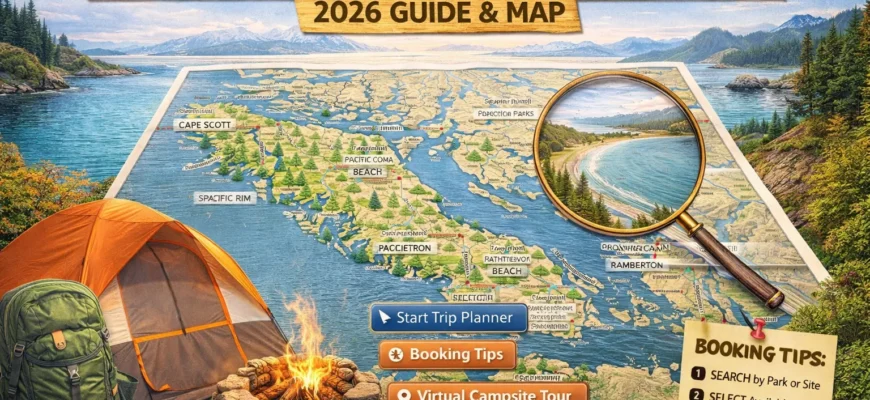
Vancouver Island Camping Map
Below is an interactive map legend covering all major campground types across the island’s regions. Use filters to find specific campground categories suited to your trip style.
[INSERT INTERACTIVE MAP WITH THE FOLLOWING LAYERS]
Map Legend:
-
🔴 Provincial Park Campgrounds (vehicle-accessible frontcountry): Reservable sites with amenities, hot showers, sani-stations
-
🟤 Walk-In & Backcountry Provincial Park Sites (foot access, minimal amenities)
-
🟢 National Park Campgrounds (Pacific Rim only): Green Point, West Coast Trail, Broken Group Islands camping
-
🟠 Private RV & Campgrounds (full/partial hookups, year-round operation)
-
🟣 Recreation Sites (free or low-cost, first-come-first-serve, basic facilities)
-
🟦 Marine & Paddle-In Sites (water access only, backcountry permits required)
Map Features:
-
Click campground for name, site count, amenities summary
-
Filter by region: South Island, East Coast, West Coast, Central Island, North Island
-
Filter by campground type: Provincial park, national park, private, recreation site, RV park
-
Filter by amenities: Hot showers, electrical hookups, sani-dump, beach access, lake access, cell signal
-
Reservable vs. first-come-first-serve: Distinguish visually (e.g., filled circles = reservable; hollow circles = FCFS)
Campground Regions: Pick an Area
Vancouver Island’s camping landscape divides into five distinct regions, each with different character, access, and demand patterns.
South Island: Victoria & Sooke Region
Character:
Quick-access camping within 1 hour of BC’s capital. Mild temperatures, less wildfire smoke risk, and established tourist infrastructure. Popular for long-weekend escapes and family day trips.
Best For:
Families, first-timers, those wanting short drives from urban areas.
Key Campgrounds:
-
Bamberton Provincial Park (Mill Bay, 30 km north of Victoria): 47 vehicle/tent sites, sandy beach on Saanich Inlet, spectacular views of Gulf Islands and Mount Baker. Hot showers, flush toilets. Reservations essential in summer; first-come-first-serve spots available if arriving by noon. Open year-round.
-
Goldstream Provincial Park (Sooke, 20 km from Victoria): 164 sites, family-friendly, visitor center, amphitheater programs, hot showers, playground, bike pump track. Popular with school groups. Fees charged March-October.
-
French Beach Provincial Park (Sooke area): Rainforest-sheltered campsites, coastal access, staging point for exploring rugged Sooke coastline.
Logistics:
Excellent highway access (Trans-Canada Highway 1). Day-trip distance to Victoria attractions. Mill Bay ferry to Brentwood Bay provides Gulf Islands access. Expect high weekend occupancy even in shoulder season.
Wildfire Smoke & Weather:
South Island is largely protected from interior wildfire smoke due to coastal location and distance from inland fire zones.
East Coast: Cowichan Lake, Nanaimo & Parksville Region
Character:
The island’s busiest camping region, featuring family-friendly beaches, accessible trail systems, and a concentration of provincial and private parks. High demand but abundant choice. Mix of oceanfront and lakefront camping.
Best For:
Families, RV travelers, those seeking reliable facilities and organized activity.
Key Campgrounds:
-
Miracle Beach Provincial Park (22 km north of Courtenay, 22 km south of Campbell River): 201 vehicle-accessible sites, safe sandy beach, hot showers, flush toilets, adventure playground, nature center with saltwater aquariums, ranger programs. Reservations strongly recommended; first-come-first-serve spots fill by mid-morning in peak season. Open year-round (winter fee structure).
-
Little Qualicum Falls Provincial Park (near Parksville): 96 private sites across two campgrounds, 6 km of hiking trails, access to Little Qualicum River and two spectacular waterfalls. Popular for families.
-
Rathtrevor Beach Provincial Park (Parksville): 174 sites, broad safe beach, family-oriented, easy beach access.
-
Sproat Lake Provincial Park (Upper & Lower campgrounds): Lake-based camping, water activities, scenic drive-through.
-
Gordon Bay Provincial Park (Cowichan Lake, Duncan area): 130 sites, sunny exposure, hot summer days, popular swimming lake.
Logistics:
Highway 19 runs the length of the east coast; all parks are within 5 minutes of main highway. Nanaimo is the primary supply hub (Costco, fuel, groceries). Parksville and Courtenay offer tourist services and restaurants.
High Demand Pattern:
East Coast is the most competitive booking region. Reserve 3 months ahead for late June-August. Weekdays are noticeably quieter than weekends.
West Coast: Tofino, Ucluelet & Pacific Rim National Park
Character:
Dramatic, rugged, and iconic. Wins for scenery and outdoor experiences but demands early booking and patience with crowds. Access to world-famous Long Beach, surf culture, and Pacific Rim trails.
Best For:
Beach lovers, surfers, outdoor photographers, those willing to book 6+ months ahead.
Key Campgrounds:
-
Green Point Campground (Pacific Rim National Park, Long Beach Unit): 94 full-serviced sites with electrical hookups, showers, flush toilets. Only developed campground in Long Beach Unit. Bluff location with 5-minute trail to Long Beach. Reservations open late January for 2026 season and book out within weeks for July-August. Parking lot overflow available but extremely limited.
-
West Coast Campground (Ucluelet): Rainforest tent sites near Pacific Rim Visitor Centre. On-site surf shop, restaurant (Ukee Poke). Quieter than Tofino hub but excellent location for park access.
-
Ucluelet Campground (Ucluelet): 125 sites, inner-harbour location, walking distance to Wild Pacific Trail, restaurants, and galleries. Mountain and harbour views.
-
Wild Pacific Camp (Ucluelet): Oceanfront serviced RV sites (no tents); premium location for water views.
West Coast Specifics:
Highway 4 from Port Alberni (88 km, 1.5-hour drive) is the only road access; narrow, winding, and can be slow in heavy traffic. Both Tofino and Ucluelet have limited accommodation. Booking 6 months in advance is common for July-August. Peak-season rates are 30-50% higher. Gas, groceries, and supply runs are expensive; load up before leaving Nanaimo or Port Alberni.
Logistics & Timing:
West Coast is best visited in July or early September when weather is most reliable. August can be smoky. June is possible but rainier. Rain jackets and waterproof gear are mandatory even in “dry” season.
Central Island: Strathcona Provincial Park & Alpine Lakes
Character:
Mountain scenery, alpine meadows, pristine lakes, and challenging trail systems. Less crowded than coast-facing parks. Quieter, more nature-immersive experience. Ideal for hikers and those seeking solitude.
Best For:
Hikers, backcountry adventurers, those seeking peace and mountains, photographers.
Key Campgrounds:
-
Buttle Lake Campgrounds (Strathcona Provincial Park): 160 sites split across Buttle Lake and Ralph River campgrounds. Waterfront setting, access to 52 km of maintained trails, waterfalls (Lower Myra Falls, Lady Falls), alpine lake day hikes, and backcountry routes. Quiet camping experience with minimal noise. Ranger station on-site. Great base camp for exploring the park.
-
Backcountry sites (Helen Mackenzie, Kwai, Circlet Lakes): Designated alpine camping on Forbidden Plateau. Snowmelt timing can limit early-season access.
Logistics:
1.5 hours from Campbell River via Highway 19 north, then inland onto Campbell River Road (follow park signs). Well-maintained paved road with scenic lake drive. Limited supply options near park; stock up in Campbell River. Gas availability is limited; refuel in Campbell River before driving to park.
Seasonality:
Strathcona is accessed mid-May through October. Alpine trails may be snow-covered until late June. September offers reduced crowds and reliable weather.
North Island: Port Hardy, Cape Scott & Remote Wilderness
Character:
Remote, rugged, and challenging. The island’s final frontier. Extreme isolation, limited services, and multi-day access via logging roads or water. For serious wilderness adventurers only.
Best For:
Experienced backcountry campers, multi-day trail hikers, those seeking true wilderness solitude.
Key Destinations:
-
Cape Scott Provincial Park (Northern tip of Vancouver Island): Remote coastal wilderness at the island’s northwestern extreme. Access via rough 67 km dirt logging road (often muddy) from Port Hardy (4-hour drive from Nanaimo). Only parking lot facilities. Trailhead for Cape Scott Trail (3 km to Eric Lake, scenic camp beach) and North Coast Trail (43 km over 6-8 days).
-
North Coast Trail (Cape Scott): Multi-day backcountry route via water taxi from Port Hardy. Requires strong paddling or hiking skills. Designated campsites at Shushartie Bay, Skinner Creek, Nahwitti River, Cape Sutil, Irony Creek, Laura Creek, and Nissen Bight.
-
Port Hardy Camping Options: Wildwoods Campsite, Quatse River Campground, Scotia Bay Resort (nearby Port McNeill). Limited options; book well in advance.
Logistics & Challenge:
-
4-hour drive from Nanaimo on Highway 19 north
-
Cape Scott Trailhead: 67 km rough logging road with multiple gates; high-clearance vehicle recommended
-
Water taxi to North Coast Trail: $300-$400 per person round-trip; book months in advance
-
Nearest supply hub: Port Hardy (limited groceries, fuel)
-
Seasonal shuttles: North Coast Trail Shuttle operates summer only; closes October
Best Time:
July-early September only. Winter is impassable. Spring may have washouts. Late June can be rainy.
Why Go:
Extreme solitude, pristine coastal wilderness, wildlife viewing (whales, bears, eagles), and the satisfaction of reaching one of Canada’s remotest trailheads. Not for casual campers.
Best Camping in Provincial Parks: Core Cluster
Below is an editor’s picks list from across the island’s provincial parks, organized by region. Each represents standout experiences in its category.
South Island Standouts:
-
Bamberton Provincial Park: Best for sandy-beach camping close to Victoria; arbutus groves and Mount Baker views.
-
Goldstream Provincial Park: Family-friendly with organized programs and visitor center; best for those wanting interpretation and activities.
East Coast Standouts:
-
Miracle Beach Provincial Park: Iconic family beach camping; best for tidal-zone exploration and organized recreation.
-
Little Qualicum Falls: Waterfall access and hiking diversity within one park; best for multi-activity camping.
West Coast Standout:
-
Green Point Campground (Pacific Rim NP): Only option in Long Beach Unit; booking 6 months ahead justified by scenery.
Central Island Standout:
-
Buttle Lake (Strathcona): Quiet, mountain-immersive base camp; best for hikers and solitude seekers.
North Island Standout:
-
Cape Scott Trailhead: Extreme wilderness for experienced hikers; most remote and rewarding.
[LINK: “Best Provincial Park Campgrounds on Vancouver Island (by region)” – Comprehensive mega-guide with 50+ parks, detailed amenities, reservation strategies, and regional comparisons]
[LINK: “Beach Campgrounds vs. Forest Campgrounds: Which to Choose?” – Decision framework comparing oceanfront sites (Miracle Beach, Bamberton, Green Point) vs. forest interior parks (Buttle Lake, Goldstream)]
[LINK: “Lake Provincial Park Camping Guide” – Deep-dive covering Cowichan Lake, Sproat Lake, Gordon Bay, and alpine lakes in Strathcona]
National Parks & Signature Experiences
Pacific Rim National Park Reserve: Camping Options & Rules
Pacific Rim National Park Reserve spans three distinct units across Vancouver Island’s west coast, offering diverse camping from car-accessible to extreme backcountry.
Long Beach Unit: Green Point Campground
The park’s only developed campground. 94 full-serviced sites on a bluff above Long Beach. Electrical hookups (rare for Pacific Rim), flush toilets, hot showers, potable water, and firewood available for purchase. Picnic tables and fire rings at each site. Group facilities available. Reservations through Parks Canada Reservation Service (1-877-737-3783) or online. Opens for 2026 season January 29, 2026 at 8 a.m. PT. Fees are premium (~$30-$45 per night depending on hookup level). Open May 1-mid-October.
Broken Group Islands Unit: Paddle-In Marine Camping
Designated camping on seven islands (Hand, Turret, Gibraltar, Dodd, Clarke, Gilbert, and adjacent sites) in Barkley Sound. No developed facilities. Composting outhouses at camping areas. No potable water—bring 4-6 liters per person per day. Backcountry permits required through Parks Canada Reservation System. Camping May 1-September 30 only (closure October 1-April 30 for conservation). Excellent for 3-4 day kayak expeditions. Expect 15-25 km paddling daily. Launch from Toquaht Nation’s Secret Beach Campground (Bamfield area) or book water taxi (Broken Islands Lodge operates licensed transport). Fees: ~$10/night backcountry camping permit + water taxi costs.
West Coast Trail Unit: Backcountry Trek
77 km, 5-7 day multi-day hike along Vancouver Island’s most iconic trail. Ladder climbs, suspension bridges, tidal zone navigation, and rugged coastal scenery. Designated campsites with outhouses and water sources (except km 30-40 stretch). Parks Canada permits required; limited to 60 hikers per day. Reserve 4-6 weeks in advance (spring 2026 bookings open late January). Permits: ~$130. Recommended for experienced hikers. Detailed packing list required (bear-proof food storage, rain gear, water filter).
Key Rules:
-
Camp only at designated sites
-
Pack out all waste (pack-in, pack-out Leave No Trace protocol)
-
Fires prohibited; bring stove for cooking
-
No motorized boats in backcountry areas
-
Respect closed seasons (Broken Group Islands closed Oct-April)
-
White gas, propane, and canister stoves only (no wood fires)
Bucket-List Routes: West Coast Trail & Broken Group Islands
West Coast Trail: The Classic Challenge
Best for: Experienced hikers, multi-day commitment, technical difficulty tolerance.
77 km from Pachena Beach (near Ucluelet) to Port Renfrew. 5-7 days, depending on pace and rest days. Iconic sections include Pachena Point lighthouse approach, scrambles across tidal shelves, the famous ladder system at Hole-in-the-Wall, Suspension Bridge over Gordon River, and the final beaches near Port Renfrew. Originally a lifesaving trail for shipwrecked sailors; now one of Canada’s premier backcountry hikes.
Logistics:
-
Trailhead access: Pachena Beach (north) or Port Renfrew (south)
-
Permits: Parks Canada Reservation System; limited to 60 hikers daily
-
Booking window: Opens late January annually for summer season
-
Cost: ~$130 permit, plus transportation to trailheads
-
Seasons: May 1-September 30 (peaks mid-July to mid-August; busiest and most booked)
-
Packing: 4-5 day food ration, water filter, bear-proof canister, synthetic sleeping bag, rain gear, first aid (injuries common on ladders and tidal sections)
Broken Group Islands: Paddler’s Archipelago
Best for: Experienced kayakers, water-based camping, marine wildlife viewing.
100+ islets in Barkley Sound; designated camping on 7 islands. 3-4 day typical expedition. Paddling 15-25 km daily between islands. Explore sheltered bays, shell beaches, cedar groves, and seal colonies. Less crowded than West Coast Trail; permits available through Parks Canada Reservation System (walk-ups possible but not guaranteed in peak season).
Logistics:
-
Seasonal: May 1-September 30 only
-
Access: Toquaht Nation’s Secret Beach Campground (Bamfield area) or water taxi operators
-
Permits: Backcountry camping (~$10/night), Parks Canada Reservation System
-
Cost: ~$40-100 for camping permits, $300-500 for water taxi if renting kayaks
-
Paddling skills: Minimum intermediate; plan for 15-25 km/day across open sound
-
Safety: Tides, currents, and weather can be unpredictable; paddling partners essential
Safety & Leave No Trace Reminders
Essential Safety Practices:
-
Weather monitoring: Check forecasts before departure; turn back if conditions deteriorate
-
Navigation: Carry topographic maps, compass, and GPS device; cell service unreliable
-
Water: Filter or treat all surface water; giardia and cryptosporidium present in untreated sources
-
Bear safety: Store food properly; never leave food at site unattended
-
First aid: Carry blister treatment, wound care, pain relief; many trailheads are hours from medical care
-
Buddy system: Hike with partners; solo travel increases risk if injury occurs
-
Permit compliance: Carry permit copy; camps only at designated sites
Leave No Trace Core Principles:
-
Plan ahead and prepare: Know your route, weather, water sources, and bear activity
-
Travel on durable surfaces: Stay on marked trails; avoid cutting switchbacks
-
Dispose of waste properly: Pack out all garbage; use outhouses or designated latrines
-
Leave what you find: Don’t remove shells, rocks, plants, or artifacts
-
Minimize campfire impacts: Use established fire rings; keep fires small; fully extinguish before leaving
-
Respect wildlife: Observe from distance; don’t feed animals; store food securely
-
Be considerate of others: Avoid loud noise; camp away from trail corridors; respect quiet hours
Recreation Sites & Dispersed-Style Alternatives
What Is a Recreation Site?
Recreation sites (also called “rec sites”) are basic, unserviced camping areas managed by BC Forests, Lands, Natural Resource Operations and Rural Development. They provide rustic camping on remote forestry roads, lakeshores, and river valleys, typically with minimal facilities and zero fees or very low fees (~$0-$10/night).
Typical Amenities:
-
Pit toilets (if any)
-
No potable water; must treat surface water or bring supply
-
Basic parking and turnaround space
-
No electrical hookups, showers, or organized programs
-
Fire rings at some sites
Access:
Most rec sites are located 30-60 km from main highways on gravel forestry roads. GPS or detailed mapping (Backroads Mapbook) is essential for finding them. High-clearance or 4WD vehicles recommended, especially after rain when logging roads become impassable.
Camping Rules:
-
First-come-first-serve availability
-
Typically 14-day maximum stay limit
-
No reservations accepted
-
Fires allowed unless under wildfire ban
-
Pack out all waste
-
Must be self-sufficient
Best For:
Budget campers, self-reliant explorers, those seeking solitude and nature immersion without crowds or fees.
Finding Recreation Sites: Maps & Resources
Backroads Mapbook (Vancouver Island Edition):
Most detailed resource for locating rec sites. Shows all forestry roads, recreation sites, and access points. Available at outdoors shops and online retailers. Essential for trip planning if using GPS coordinates or mapping apps (Google Maps often lacks rural forestry road accuracy).
FreeCampsites.net & VanFreeChomp:
Community-contributed databases of free/cheap camping. Search by region; check recent reviews and GPS coordinates. Crowd-source photos and current condition reports.
BC Parks “Recreation Sites” Official List:
BC gov website lists official rec sites by region with basic info (water sources, facilities, vehicle access). Not all user-discovered sites appear here.
Road Access Considerations:
-
2WD vehicles: Can usually reach main rec sites if roads are well-maintained
-
High-clearance/4WD essential: Logging roads become muddy and rutted after rain; some gates may be locked seasonally
-
Winter closure: Many forestry roads close October-March due to logging activity or snow
-
Fuel planning: Rec sites are 20-60 km from town; refuel before driving into remote areas
Recreation Sites: Rules Checklist
✓ Fire Safety:
-
Fires allowed unless wildfire ban in effect (typically July-August)
-
Use existing fire rings; keep fires small
-
Fully extinguish before leaving (drown with water, stir ashes, touch to skin to check for heat)
-
Never leave fire unattended
✓ Waste & Toilets:
-
Use pit toilet if available; otherwise, dig cathole 100 meters from water and campsite
-
Pack out all trash and food waste
-
No dumping of grey water directly in lakes; filter food scraps and scatter 200 meters away
✓ Noise & Quiet Hours:
-
No loud music or generators (generators typically banned at rec sites)
-
Respect quiet hours (usually 10 p.m.-7 a.m.)
-
Keep voices low and avoid late-night activity
✓ Length of Stay:
-
14-day maximum at most recreation sites
-
Some restrict to 7 days during peak season
-
Check on-site sign for specific site limits
✓ Vehicle Restrictions:
-
Park only in designated areas; don’t block access roads
-
High-water-clearance vehicles only on some roads (signs posted)
-
No off-road driving or site damage
✓ Wildlife & Food Storage:
-
Use bear-proof canister or hang food 4 meters high, 1.3 meters from supports
-
Never leave food unattended
-
Report bear activity to nearest ranger station or phone line
Best Recreation Sites on Vancouver Island
Cowichan Lake Area (South Island):
Multiple rec sites around Cowichan Lake’s shoreline. Spring Beach and Bald Mountain (boat/foot access only), Pine Point and Maple Grove (roadside lakefront), Nixon Creek. Good for lake camping, fishing, and canoe access.
Taylor Arm / Sproat Lake Area (Central Island):
Free rec sites near Sproat Lake. Taylor Arm is accessible via logging road; right-on-beach camping in summer (seasonal access). Excellent for budget-conscious water camping.
North Island Access Roads (Cape Scott Region):
San Josef River Recreation Site and San Josef Heritage Park near Cape Scott Trailhead. Minimal facilities but strategic staging for North Coast Trail and Cape Scott hiking.
Booking, Fees & How to Actually Get a Campsite
Success in peak-season camping hinges on understanding three distinct booking pathways: reserved sites through BC Parks, Parks Canada permits, and first-come-first-serve scrambles at recreation sites and non-reservable provincial park sites.
Reservation Systems: BC Parks vs. Parks Canada vs. Private Parks
BC Parks Frontcountry Reservations (DiscoverCamping.ca)
BC Parks operates a three-month rolling reservation window (as of 2026, reduced from four months). You can reserve arrival dates up to three months in advance. The system refreshes daily at 7 a.m. PT, releasing new dates.
How It Works:
-
Visit DiscoverCamping.ca (or phone 1-800-689-9025)
-
Create an account with email and password
-
Search parks by name, region, or campground features (showers, hookups, lake access)
-
Select arrival date and length of stay (up to 13 consecutive nights)
-
Book all nights in your stay at once (don’t need to wait for each individual day to release)
-
Payment: Debit, credit card, or phone reservation with credit card
-
Confirmation: Email receipt with reservation number
2026 Rolling Window Examples:
-
Want to arrive July 12? Book starting April 12 at 7 a.m. PT
-
Want to arrive August 15? Book starting May 15 at 7 a.m. PT
-
Peak dates (July 15-August 15, weekends, holidays) fill within minutes to hours of release
Multi-Day Booking Advantage:
If you want to camp August 10-17 (7 nights) at a specific campground, you can book all 7 nights on May 10 when August 10 first becomes available. You do NOT need to wait daily for August 11, 12, 13, etc. to be individually released. This is the key to securing longer trips.
Peak Season Timing:
-
Long weekends (May Long, Canada Day, BC Day, Labour Day) book within 5-15 minutes of release
-
July weekends fill within 30-60 minutes
-
Weekday dates in July remain available longer (hours to a few days)
-
Early September opens up significantly; many peak-season sites still available
Cancellation Monitoring:
If your preferred dates fill, monitor for cancellations daily at 7 a.m. PT. Cancellations typically occur 1-7 days before arrival as travel plans change. Set phone alarm for 7 a.m., refresh DiscoverCamping immediately at opening, and grab released dates within minutes.
Fees:
Vary by campground and season ($15-$45/night for provincial parks). Peak-season rates apply July-September 15. Full payment due at reservation.
Parks Canada Reservations (Pacific Rim NP & West Coast Trail)
Parks Canada manages Green Point Campground (Pacific Rim National Park, Long Beach Unit), West Coast Trail permits, and Broken Group Islands backcountry permits through the Parks Canada Reservation Service.
How It Works:
-
Online: PC Reservations website (reservations.pc.gc.ca)
-
Phone: 1-877-737-3783
-
Green Point Campground: 94 sites, opens for reservations January 29, 2026 for the 2026 season
-
West Coast Trail: 77 km backcountry hike; permits limited to 60/day
-
Broken Group Islands: Backcountry camping permits; water taxis arranged separately
Booking Windows:
-
Green Point: Opens in late January for May 1-mid-October season; July-August fills within weeks
-
West Coast Trail: Opens in late January; peak dates (July-mid-August) fill 4-6 weeks in advance
-
Broken Group Islands: Rolling basis; less competition than WCT or Green Point but high variability
Fees:
-
Green Point: $30-$45/night (electrical hookups premium)
-
West Coast Trail: ~$130 permit (valid for 5-7 days)
-
Broken Group Islands: ~$10/night backcountry camping permit
Private Campgrounds & RV Parks
Private parks (Fort Victoria RV Park, West Coast Campground, Ucluelet Campground, etc.) typically accept reservations directly via website or phone. Most use online booking systems (Campground management software like Campsites.com or their own platforms).
Advantages:
-
More flexible cancellation policies
-
Often have sites available when provincial parks are full
-
Premium amenities (WiFi, laundry, convenience store, restaurants)
-
Season-round operation at many facilities
Disadvantages:
-
20-50% higher rates than provincial parks
-
Peak-season rates may be $50-$100+/night
-
Less “wild” camping feel; more resort-like atmosphere
Booking Approach:
Search Google for “[Campground Name] reservations” or visit TripAdvisor/Google Maps for direct links. Many private parks show live availability calendars with instant booking.
Release Windows & Cancelation Stalking Strategy
Three-Month Window Strategy (BC Parks):
The rolling window is unforgiving. Here’s a practical playbook:
-
Set Calendar Reminders:
Mark your calendar 3 months before your desired arrival date. Example: Want July 15? Set reminder for April 15 at 6:55 a.m. PT. -
Pre-Stage Your Bookmark:
Have DiscoverCamping.ca open in your browser the night before. Log in. Search for your desired park and campground. Do NOT book yet; just have it ready. -
7 a.m. PT Refresh:
At exactly 7 a.m., refresh the page or re-search the park. Your desired dates will now be available. -
Book Immediately:
If your dates appear, book all nights of your stay at once (up to 13 nights). Peak dates vanish within 5-15 minutes. -
Backup Plan:
If your first-choice dates fill, immediately search for:-
Same park, different dates (July 22-29 instead of July 15-22)
-
Different park, same region (Miracle Beach full? Try Rathtrevor Beach, 20 km away)
-
Shoulder-season dates (June 20-27 instead of July; noticeably quieter)
-
Cancelation Stalking (Advanced Tactic):
If your dates fill before you can book, monitor for cancellations:
-
Check DiscoverCamping at 7:05 a.m., 7:10 a.m., 7:15 a.m. (cancelations often appear in first 15 minutes after refresh)
-
Set a daily phone alarm for 6:55 a.m. for 3-5 days before your trip
-
Search your park and look for newly available dates
-
Some campers cancel 1-3 days before arrival; aggressive stalking can land late-release spots
Reality Check:
Peak-season dates (July 15-August 15 weekends) at popular parks (Miracle Beach, Green Point) may have zero cancelations if they’re fully booked. Flexibility on dates or willingness to drive to less-popular parks is critical.
First-Come-First-Serve Strategy & Backup Planning
If reserved campsites are full, several options remain:
First-Come-First-Serve Provincial Park Sites:
Most provincial parks reserve 50-80% of sites and hold 20-50% for first-come campers. Arrive early (7-10 a.m. at parks with gatehouses) to claim available spots.
Check-In Logistics:
-
Early morning arrival: First-come sites released as people depart (typically 10 a.m. checkout)
-
Drive the loop: Circle the campground checking for open sites
-
Talk to ranger: Ask which sites are likely to turn over by afternoon
-
Parking lot backup: Some parks (e.g., Miracle Beach) overflow parked cars in day-use lot; move to site once one opens
Success Rate:
-
Weekdays in June/September: 70-90% chance of finding site by noon
-
Weekends in July: 30-50% chance; if arriving after 10 a.m., very unlikely
-
Midweek July: 60-80% chance if arriving before 10 a.m.
Recreation Sites (Always Available):
Recreation sites are first-come-first-serve and almost never full (they lack amenities and are harder to access). If all provincial parks are booked:
-
Use Backroads Mapbook or FreeCampsites.net to locate nearby rec site
-
Drive to site; camp on forestry road
-
Expect pit toilet or no toilet, no water, no facilities
-
Cost: Free to $10/night
Private Parks Backup:
Private campgrounds often have openings when provincial parks are full:
-
West Coast Campground (Ucluelet), Ucluelet Campground, and Tofino private parks have higher turnover
-
Fort Victoria RV Park (Victoria) has 300 sites; finding space more likely
-
Call ahead mid-afternoon if driving to area; ask about evening check-in availability
-
Higher cost but near-guaranteed accommodation
Practical Tips That Reduce Trip Friction
Rain Strategy: Tarps, Ventilation & Drying Routine
Reality: Vancouver Island gets rain in any season. Even July is not immune; June is particularly wet on west coast. Smart campers plan around water, not against it.
Tarp Setup:
A quality large tarp (10×12 feet minimum) becomes your command center. Pitch it 6-8 feet high with guylines creating a 45-degree angle. This creates:
-
Covered cooking/prep area
-
Gear drying station
-
Rest area in heavy rain
-
Wind/spray barrier at exposed beach camps
Tent Ventilation:
-
Always leave some air flow: crack tent vents or door slightly even if raining
-
Condensation from 2-4 people breathing in sealed tent = soaked sleeping bags
-
Choose tent site on slight slope (never in drainage gullies or lower ground pockets)
-
Ventilated rainfly and mesh interior promote airflow
Gear Management:
-
Never store wet gear in sealed bags; use ventilated mesh bags in tarp area
-
Daily drying routine: Spread out wet items morning sun (even overcast days = evaporation)
-
Synthetic sleeping bag (not down): Retains warmth when damp; down absorbs moisture and loses insulation
-
Waterproof stuff sacks for electronics, documents, first aid
Daily Routine:
-
Morning: Air out sleeping bags and tent interior (even if cloudy; evaporation works)
-
Midday: Wring out damp socks, lay fleece in sun/wind
-
Evening: Ensure tent vents open before bed; check for new condensation
Rain Gear:
-
Lightweight rain jacket (packable, not cotton)
-
Hiking pants with zip-off legs (flexibility)
-
Waterproof backpack cover or dry bags
-
Hat with brim (keeps rain off face during hiking)
Wildlife & Food Storage: Raccoons, Bears & Proper Storage
Bear-Proof Food Storage: The Non-Negotiable
Bears are present throughout Vancouver Island, particularly in interior and northern zones. Black bears are the primary species; grizzlies are absent. Bears are intelligent, curious, and have excellent smell (7x better than bloodhound). A single fed bear becomes a problem bear that may be destroyed by wildlife services.
Three Approved Methods:
-
Bear-Proof Canisters (Best for Backcountry)
Hard plastic or aluminum containers that resist bear claws and teeth. Examples: Ursack, Garcia Machine Bear Canister. Weight: 1-2 kg. Store at least 100 meters from camp. Cover canister with dirt/rocks so it’s less visible. Cost: $100-$300 per canister. -
Bear Boxes & Food Caches (At Established Campsites)
Many provincial parks and backcountry sites provide metal bear boxes or raised food caches. Simply place all food, garbage, pots, dishes, toiletries, and scented items inside. Campfire is safe, but never leave food at fire pit. -
Hanging Rope (Backcountry Emergency Method)
Hang food in a dry bag from a rope at least 4 meters above ground, 1.3 meters away from trunk and branch tips. Use a carabiner to create a pulley system. Requires 50 feet of sturdy rope and tree geometry that allows safe hanging. Slower method; preferred only if box or canister unavailable.
What Bears Can Smell:
-
Food (open or closed)
-
Trash and food scraps
-
Used cooking pots and dishes
-
Toothpaste, sunscreen, cosmetics
-
Garbage bags, napkins, foil
-
Bacon grease, sauces, wet wipes
Never Leave Unattended:
All of the above items MUST be stored in bear box, canister, or hanging rope. Do not assume one meal is safe; bears test and remember locations.
Raccoon Prevention (Drive-In Campgrounds):
Raccoons are common at established parks. They’re clever and persistent. Use bear box even if bears are unlikely (boxes protect from all wildlife). Ensure trash cans are closed and food is secured before dark. Never feed raccoons; it conditions them to raid other campsites.
Behavior If You Encounter a Bear:
-
Do not run (triggers chase instinct)
-
Make yourself large; back away slowly while maintaining eye contact
-
Talk in calm, firm voice (“Hey bear, I’m leaving”)
-
If charged: Use bear spray (test before trip); spray when bear is 20-30 feet away
-
Do not climb trees (bears are excellent climbers)
-
Report encounter to nearest ranger station
Quiet Hours, Generator Etiquette & Beach Wind/Sand
Quiet Hours & Noise Guidelines
Most provincial parks enforce 10 p.m.-7 a.m. quiet hours. Violators can be asked to leave or fined.
-
No loud music or audio (even after quiet hours, keep volumes respectful)
-
No loud voices or parties; sound travels far in forest
-
Car doors: Close gently; avoid slamming
-
Generators: Allowed only during designated hours (usually 9 a.m.-9 p.m.) and not at all at some parks
-
Children: Supervise to minimize screaming during quiet hours
Generator Etiquette (RV Camping):
If your park allows generators:
-
Run only during designated hours (typically 9 a.m.-9 p.m.)
-
Place generator at downwind perimeter of campsite (away from neighbors)
-
Minimize runtime; refuel at fuel stations, not in camp
-
Muffler noise dampening pads help significantly
-
Consider portable power banks or solar panels as quieter alternatives
Beach Camping Wind Strategy (West Coast):
Tofino, Ucluelet, and exposed beach sites experience constant 15-30 mph winds.
-
Site selection: Camp in forest edge or dunes (not exposed beach top)
-
Stakes: Use heavy-duty storm stakes rated for wind; 8-10 stakes per small tent
-
Guy lines: Ensure all guylines taut at 45-degree angles; wind leverage is strongest at slack guylines
-
Tent design: Choose low-profile tent; domed/tunnel shapes resist wind better than flat A-frames
-
Sand: Use windbreak stakes; dig slightly into sand for tent anchoring
-
Gear: Secure loose items (tarps, cooking gear) with tied-down straps; sand devils are common
-
Sand management: Microfiber towel at tent entrance; dry brush for gear; sealed food containers prevent grit ingestion
Connectivity & Offline Navigation
Cell Service Reality:
Vancouver Island has spotty cell coverage, especially at remote campgrounds, recreation sites, and backcountry trailheads. Planning without assuming connectivity is essential.
Offline Maps (Essential):
-
Maps.me (free app): Download entire Vancouver Island region; works without data/signal
-
Gaia GPS (free tier with paid upgrades): Download topographic maps for hiking
-
Garmin BaseCamp: If you own a Garmin GPS device, load maps at home before trip
Offline Navigation Tools:
-
Printed topographic maps (1:50,000 scale, NTS series) for backcountry routes
-
Compass and basic map-reading skills (triangulation, bearing)
-
GPS device (Garmin, Magellan) if serious about remote hiking
-
Paper backup of park maps (printed from BC Parks or Parks Canada websites)
Communication Contingency:
-
Inform someone of your itinerary and expected return date
-
Leave contact information with park ranger
-
Satellite messenger (Garmin inReach, SPOT) for true remote areas (optional but valuable)
-
Carry first aid kit; assume you may need self-rescue or delayed help
Internet Access (Convenience):
Most private RV parks and established provincial parks offer WiFi (though often weak). Recreation sites have none. Expect no connectivity for email/social media; plan activities around this.
Sample Itineraries: Conversion-Friendly Trip Plans
3-Day South Island Camping Weekend
Best For: First-timers, Victoria-based travelers, families with limited time.
Campgrounds: Bamberton Provincial Park (primary) or Goldstream Provincial Park (alternative)
Itinerary:
Friday Evening:
-
Leave Victoria 4 p.m., arrive Bamberton 5 p.m. (30 minutes)
-
Pitch tent at first-come-first-serve site or via afternoon arrival
-
Cook dinner at camp; explore beach at low tide (tide tables crucial in Saanich Inlet)
-
Sunset views of Gulf Islands and Mount Baker from beach
Saturday (Full Day):
-
Morning: Beach walk, tide-pool exploration (exposed pools at low tide + 6 hours)
-
Lunch: Picnic on beach
-
Afternoon: Hike short forest trail (park has loop trails); rest at camp
-
Evening: Campfire, stargazing, dinner
Sunday Morning:
-
Final beach walk
-
Pack and depart by 11 a.m.
-
Stop in Mill Bay for final coffee and supplies
Total Distance: 30 km from Victoria
Booking: Reserve 3 months ahead for late May-August weekends; mid-week easier; shoulder season (June, Sept) abundant availability
Cost: ~$25-$35/night (Bamberton); groceries and fuel $100-$150
7-Day “Classic Loop”: East Coast + West Coast
Best For: Mixed camping styles, week-long vacation, diverse landscapes in single trip.
Campgrounds: Miracle Beach (East Coast, 3 nights) → Green Point (Pacific Rim, 3 nights) → Ucluelet private park (1 night return trip)
Daily Breakdown:
Days 1-3: East Coast (Miracle Beach Provincial Park)
-
Arrive Campbell River area Friday afternoon (mid-island hub)
-
Miracle Beach: 22 km north of Courtenay, reserved site or early first-come-first-serve
-
Activities: Beach exploration, tide pools, nature center, adventure playground, 6 km forest trail day hike
-
Logistics: Good food shops and tourist services in Courtenay/Campbell River; reasonably busy but reliable
Days 4-6: West Coast (Green Point Campground, Pacific Rim)
-
Drive Friday: Campbell River → Port Alberni → Tofino (4 hours, 175 km)
-
Green Point Campground: Electrical hookups (rare), hot showers, forest above Long Beach
-
Activities: Long Beach day hikes (Shoreline Loop Trail, Shorepine Bog), village walks in Tofino, sunset beaches, tide-pool exploration, wildlife viewing (possible whale/eagle spotting)
-
Logistics: Book Green Point 6 months ahead (January release for July trip). Limited capacity; backup to West Coast Campground or Ucluelet Campground if full
-
Warning: Extremely high demand; many visitors unable to get sites
Day 7: Return Journey
-
Morning beach walk; depart 10 a.m.
-
Drive back to Campbell River (4 hours)
-
Lunch break in Port Alberni
-
Arrive home by evening
Total Distance: 175 km one-way (350 km round-trip)
Booking Strategy:
-
Miracle Beach: Book 3 months ahead (reserve) or arrive mid-morning for first-come (65% success rate weekdays)
-
Green Point: Book 6 months ahead (January for July trip); cancellation stalk if full
Cost: -
Accommodation: ~$25-$45/night × 6 nights = $150-$270
-
Gas: ~$80-$120 (depending on vehicle)
-
Food: ~$150-$250 for week
-
Activities: $30-$50 (parking/park fees)
-
Total: ~$450-$700 for two people
10-14 Day Extended Route: North Island + Multi-Region Loop
Best For: Serious campers, those with 2-week vacation, seeking solitude and remote experiences.
Route: South Island (Bamberton, 2 nights) → East Coast (Miracle Beach, 2 nights) → Central Island (Buttle Lake, 2 nights) → West Coast (Green Point or nearby, 2 nights) → North Island (Cape Scott area, 2-3 nights) → Return (2-3 days driving/camping)
Detailed Itinerary:
Days 1-2: South Island
-
Bamberton Provincial Park: 47 sites, beach camping, easy Victoria-area access
-
Day 2: Beach hike, tide-pool exploration, relax
Days 3-4: East Coast
-
Miracle Beach Provincial Park: 201 sites, family-friendly, organized activities
-
Day 3: Arrival and setup
-
Day 4: Full day of beach and trail hiking (6 km nature walk)
Days 5-6: Central Island
-
Buttle Lake (Strathcona Provincial Park): 160 sites, mountain setting, quiet
-
Drive: Campbell River → Strathcona (1.5 hours inland)
-
Day 5: Arrival, Myra Falls or Lupin Falls hike (short day hikes from camp)
-
Day 6: All-day hiking (Crest Mountain trail, 3-4 hours, or Forbidden Plateau access)
Days 7-8: West Coast
-
Green Point Campground or Ucluelet Campground (backup)
-
Drive: Strathcona → Port Alberni → Tofino (3.5 hours)
-
Day 7: Arrival, evening beach walk
-
Day 8: Long Beach day trips, West Coast Trail section hike (if permit available), tide-pool exploration
Days 9-11: North Island (Optional but Rewards the Adventurous)
-
Cape Scott Provincial Park (if 10-14 day trip extended further)
-
Drive: Tofino → Port Hardy (5 hours via Highway 19)
-
Days 9-10: Cape Scott Trail or North Coast Trail entry point (3 km walk to Eric Lake Beach or multi-day North Coast Trail if time/energy available)
-
Day 11: Return to Port Hardy; overnight in town or drive toward home
Days 12-14: Return & Decompression
-
Drive south: Port Hardy → Campbell River → home (8+ hours total)
-
Overnight stops in Port Alberni or Nanaimo
-
Arrive home rested
Total Distance: 800+ km (depending on North Island inclusion)
Booking Complexity: High; requires reservations at Miracle Beach and Green Point (3-6 months ahead), plus strategic first-come-first-serve at Buttle Lake and Bamberton
Cost: $800-$1,200+ (accommodation, gas, food for 14 days for 1-2 people)
Physical Demand: Moderate to high; several full-day hikes, long driving days, multi-day hiking optional
Strategic Advantage:
This loop touches all five regions, combines diverse experiences (beach, forest, alpine, coastal, island), and allows flexibility: omit North Island if schedule tightens, extend Central Island for more hiking, or swap West Coast for quieter secondary parks if Green Point is unavailable.
FAQs: Answering Common Questions
Can you free camp on Vancouver Island?
Yes, but with conditions. Free camping exists in three forms:
-
Recreation Sites: BC Forests manages free or very-low-cost (~$5-$10) sites on remote forestry roads. First-come-first-serve, minimal facilities (pit toilet or none), 14-day max stay. Use Backroads Mapbook or FreeCampsites.net to locate. Access requires GPS/detailed mapping due to rough road locations.
-
Crown Land: Federally-owned crown land allows free camping for up to 14 days. Use Backroads Mapbook to identify crown land parcels. No facilities; complete self-sufficiency required.
-
Backcountry: Some provincial parks allow wilderness camping at undesignated sites upstream from main trailheads (e.g., Carmanah Walbran). Free but requires hiking 5+ km from road and carrying all gear.
What Beaches Can You Camp On Vancouver Island?
Designated camping beaches:
-
Pachena Beach (West Coast Trail start): Beach camping adjacent to trailhead
-
Port Renfrew Beach (West Coast Trail end): Beach camping at destination
-
San Josef Bay (Cape Scott area): Unlimited beach camping above high-tide line
-
Broken Group Islands: Designated beach camping on seven islands
-
Juan de Fuca Marine Trail beaches: Sombrio, Mystic, Bear Beach (backcountry designated sites)
General beach camping rules:
-
Camp above high-tide line to avoid being swamped by incoming tide
-
Use designated sites where marked
-
Pack out all waste; no fires on some beaches (check closures)
-
Never camp on private property or reserve land without permission
How Do You Book Campsites on Vancouver Island?
Three booking pathways:
-
BC Parks (DiscoverCamping.ca): Online reservation system, 3-month rolling window, releases daily at 7 a.m. PT. Popular sites book within minutes to hours; shoulder-season (May, June, Sept) more flexible.
-
Parks Canada (reservations.pc.gc.ca): Green Point Campground (Pacific Rim), West Coast Trail permits, Broken Group Islands permits. Opens late January for summer season. Phone: 1-877-737-3783.
-
Private Parks: Direct website booking or call. Often more availability when provincial parks full. Higher rates but flexible cancellations.
-
First-Come-First-Serve: Recreation sites always available; some provincial parks hold 20-50% of sites for walk-ins. Arrive 7-10 a.m. for best selection.
Is It Safe to Camp Solo?
Solo camping is possible but requires precautions:
-
Established campgrounds: Safe; rangers and other campers nearby. Notify park staff of your itinerary.
-
Backcountry: Higher risk; hiking partners recommended. Injuries in remote areas = delayed rescue.
-
Night travel: Never hike alone in darkness or poor visibility; increases injury/getting-lost risk.
-
Communication: Carry satellite messenger (Garmin inReach, SPOT) for remote trips; inform someone of your return date.
-
Skills: Solo trip confidence requires proven camping, navigation, and self-rescue competence.
-
Site selection: Camp near water and established trails; avoid isolated locations.
Many solo travelers successfully camp on Vancouver Island; experienced solitude-seekers camp backcountry. First-solo-campers should start with established parks where facilities and nearby help are available.
Provincial Park vs. Private Campground vs. Recreation Site: Which Is Best?
Provincial Parks:
-
Best for: Families, first-timers, balanced experience (amenities + nature)
-
Pros: Hot showers, organized programs, established trails, reliable facilities
-
Cons: Higher demand, peaks in July-August, campfire bans during fire season, noise from other campers
-
Cost: $25-$45/night
-
Booking: Reserve 3 months ahead; first-come-first-serve sites available but not guaranteed
Private Campgrounds:
-
Best for: RV travelers, those seeking comfort, last-minute planning
-
Pros: More availability when provincial parks full, full hookups (electrical, water, sewer), WiFi, on-site restaurants/stores, flexible cancellation
-
Cons: 30-50% more expensive, resort-like atmosphere vs. nature immersion, less solitude
-
Cost: $50-$100+/night (especially peak season)
-
Booking: Direct online or phone; often available with minimal notice
Recreation Sites:
-
Best for: Budget campers, experienced outdoors people, those seeking solitude
-
Pros: Free or $5-$10/night, remote locations, no crowds, true wilderness feel
-
Cons: No facilities (pit toilet or none), rough forestry road access, high-clearance vehicle often needed, completely self-sufficient, 14-day max stay
-
Cost: Free-$10/night
-
Booking: First-come-first-serve always; no reservations system
Decision Matrix:
-
First family camping trip? Provincial park (Miracle Beach, Bamberton)
-
7+ day trip, okay with driving? Recreation sites for cost savings + one provincial park for amenities
-
Busy weekend, no advance booking? Private park with high capacity (Fort Victoria RV Park)
-
Solitude + self-sufficiency? Recreation site or backcountry if experienced
Conclusion
Camping on Vancouver Island rewards planning, flexibility, and respect for the land. The island’s five regions—South Island, East Coast, West Coast, Central Island, and North Island—offer diverse experiences suitable for every skill level and travel style. Whether you’re booking a family weekend at Miracle Beach, reserving a spot at Green Point for sunset Long Beach walks, or committing to the West Coast Trail, Vancouver Island delivers unforgettable camping.
Key Takeaways:
-
Book early: Reserve 3-6 months ahead for July-August peak season; shoulder months (May, June, Sept) offer flexibility
-
Have a backup plan: First-come-first-serve recreation sites and private parks fill gaps when provincial parks book
-
Pack for rain: Vancouver Island is wet; tarps, synthetic sleeping bags, and waterproof gear are non-negotiable
-
Plan for bears: Proper food storage (canisters, boxes, or hanging rope) is essential across all regions
-
Time your trip: June and July offer clearest weather; August brings wildfire smoke and extreme crowds; September is underrated
-
Respect quiet hours and Leave No Trace: Keep fires small, pack out trash, respect wildlife, and leave campsites better than you found them
Whether you’re a tent camper seeking solitude in Strathcona’s alpine lakes, an RV family enjoying Miracle Beach’s organized recreation, or a backcountry adventurer tackling the West Coast Trail, Vancouver Island’s camping landscape is world-class. Plan ahead, stay flexible, and immerse yourself in the island’s rainforests, beaches, and wild coast.
Additional Resources:
-
BC Parks: bcparks.ca (official park info, amenities, current closures)
-
Parks Canada: pc.gc.ca (Pacific Rim NP, West Coast Trail, Broken Group Islands)
-
DiscoverCamping: discovercamping.ca (BC Parks reservations)
-
Maps.me / Gaia GPS: Offline mapping for navigation
-
Backroads Mapbook (Vancouver Island): Essential for locating recreation sites and forestry roads
-
FreeCampsites.net: Community database of free and low-cost camping