Why Canada Should Be Your Next Destination
Canada stands as one of the world’s most diverse and visually stunning destinations, offering everything from the rugged granite peaks of the Canadian Rockies to the windswept Atlantic coastlines of Nova Scotia. As the world’s second-largest country by land area, Canada stretches across six time zones and encompasses ecosystems that range from temperate rainforests to Arctic tundra, making it an ideal destination for travelers seeking natural beauty, cultural immersion, and unforgettable adventures.
What makes Canada extraordinary isn’t merely its geography—though the turquoise waters of Banff National Park and the coastal charm of Prince Edward Island are undeniably breathtaking. The true magic lies in the convergence of world-class outdoor experiences, deeply rooted Indigenous heritage spanning thousands of years, and a cosmopolitan culture that welcomes visitors with genuine warmth. Whether you’re a seasoned adventurer seeking to conquer alpine trails, a culture enthusiast eager to learn from First Nations communities, or a leisure traveler looking to unwind on pristine beaches, Canada offers authentic experiences that leave lasting impressions.
This comprehensive travel guide is designed to equip you with the knowledge needed to plan your Canadian adventure strategically. You’ll discover practical logistics, seasonal timing insights based on current travel data, detailed regional breakdowns, and insider recommendations that go beyond generic tourist advice. By the end of this guide, you’ll understand not only where to go, but why each destination matters and how to structure your itinerary for maximum impact.
Essential Things to Know Before You Go
Before booking your flights, understanding Canada’s entry requirements, currency dynamics, and safety considerations will streamline your planning process and eliminate last-minute complications.
Entry Requirements and Electronic Travel Authorization (eTA)
As of February 2026, Canada has implemented full enforcement of its Electronic Travel Authorization (eTA) system for all visa-exempt foreign nationals. This represents a significant change in border procedures that directly affects international travelers.
The eTA is an online authorization that costs CAD $7 (approximately USD $5) and remains valid for up to five years or until your passport expires, whichever comes first. Notably, the system permits stays of up to 180 days per visit for eligible travelers. For citizens of visa-exempt countries—which includes most developed nations across Europe, Australia, New Zealand, and many others—the eTA eliminates the need for a traditional visitor visa, streamlining the entry process considerably.
The application process is straightforward and typically processed within minutes. You’ll need your passport, a valid email address, and a credit or debit card to complete the online form at the official Immigration, Refugees and Citizenship Canada website. One critical detail: if you’re flying to Canada, you must hold an approved eTA before boarding. This represents a departure from previous policy, as enforcement was previously selective due to COVID-related capacity constraints. Airlines now issue automatic no-board instructions for passengers lacking an approved eTA, similar to U.S. ESTA procedures.
For travelers arriving by land, sea, or cruise ship, the eTA requirement is waived—you’ll need only a valid passport. However, if you’re transiting Canada on same-day connections through major hubs like Vancouver or Toronto, you now require the eTA, closing a previous loophole.
Passport requirements are straightforward: your passport must be valid for the duration of your stay. While Canada doesn’t typically require your passport to be valid for a set period beyond your departure date (unlike some countries), best practice suggests carrying a passport valid for at least six months from your travel dates to avoid complications.
Currency and Budget Fundamentals
Canada uses the Canadian Dollar (CAD), which fluctuates against major currencies. As of early 2026, the exchange rate typically hovers around 1.35-1.40 CAD per USD, though you should verify current rates before your trip.
Understanding tipping culture is essential for avoiding awkward moments. Unlike some countries, tipping is deeply embedded in Canadian service culture. Restaurant servers typically expect 15-18% tips, rounded up for convenience. Bar staff, taxi drivers, and hotel housekeeping also expect tips in the 15-20% range. Tipping is less common at fast-casual establishments, though many point-of-sale systems now prompt for voluntary tips.
Budget planning requires realistic cost expectations. Current data from 2025-2026 indicates that most international travelers should allocate between USD $150-200 per day (CAD $200-270), depending on travel style and regions visited. Here’s a breakdown of typical daily expenses:
Accommodation: Mid-range hotels average CAD $150-200 (USD $110-150) per night in most regions, though prices escalate significantly in peak-season destinations like Banff, Lake Louise, and downtown Toronto. Budget hostels offer dorm beds for CAD $25-50, while camping in national parks starts at CAD $20 per night. Major cities like Vancouver and Montreal command premiums of 20-30% above regional averages.
Food: Budget-conscious travelers spending on groceries average CAD $55 (USD $40) daily, while mid-range dining costs approximately CAD $95 (USD $70) daily. A sit-down dinner at a mid-range restaurant ranges from CAD $30-70 per person before taxes and tip. Breakfast typically costs CAD $12-35, lunch CAD $18-40, and dinner CAD $30-70. Regional variations are significant—Atlantic Canada offers more affordable dining than major metropolitan areas.
Activities: National park entrance fees range from free to approximately CAD $10-15 per day for vehicle passes. Guided experiences, ski passes, and attraction admissions add CAD $50-150+ daily depending on your interests.
Transportation: Domestic flights on budget carriers begin at approximately USD $36, though popular routes command higher premiums. Rental cars average CAD $50-80 daily, and gas prices in early 2026 reflect regional variations, with prices generally higher in urban centers.
Geographic variations are pronounced: Western Canada, particularly around Vancouver and Banff, represents the most expensive region. Mid-range accommodations in these areas frequently approach CAD $250+ per night during peak season. Atlantic Canada and the Prairie provinces offer comparatively affordable experiences, with similar-quality accommodations running 20-30% less.
Connectivity and Practical Logistics
Canada offers excellent cellular coverage in populated areas, though coverage diminishes significantly in remote regions. Major carriers including Rogers, Bell, and Telus provide nationwide coverage. Purchasing a temporary SIM card upon arrival typically costs CAD $30-50 and includes local calling and data packages.
WiFi availability is excellent in urban centers, with most hotels, cafes, and public spaces offering complimentary connectivity. In remote areas, particularly throughout the Northwest Territories and Yukon, reliable internet becomes spotty—plan accordingly if you require consistent connectivity.
Safety Considerations
Canada consistently ranks among the world’s safest destinations. However, understanding context-specific safety nuances enhances your experience. Urban centers like Toronto and Vancouver have designated neighborhoods with elevated property crime; standard urban awareness applies. Wildlife safety is a legitimate consideration when hiking in national parks—bear encounters are rare but possible in remote backcountry areas. Always carry bear spray in grizzly country, make noise on trails, and store food properly at campsites.
Winter driving conditions demand respect and preparation. Road conditions deteriorate rapidly in mountainous regions during November through April. If driving during winter, carry tire chains, emergency supplies, and ensure your vehicle is properly maintained.
Best Time to Visit Canada: A Comprehensive Seasonal Guide
Canada’s vast geography means weather patterns vary dramatically by region and season. Strategic timing determines the quality of your experience and cost efficiency.
Summer (June to August): Peak Season Vibrancy
Summer represents the optimal window for most visitors. Long days with up to 16 hours of daylight in northern regions create extended exploration windows. Temperatures across most populated regions range from comfortable (20-25°C / 68-77°F) to warm (25-30°C / 77-86°F). All major attractions operate at full capacity, outdoor infrastructure opens for the season, and roads in mountainous regions clear of snow.
This period aligns with peak tourism, resulting in crowded popular destinations, inflated accommodation prices, and required advance bookings for accommodations and activities. Mid-July through mid-August represents the absolute peak, with prices reaching annual highs.
Summer offers the best conditions for hiking in mountain parks, water sports on lakes and coastlines, and visiting remote northern regions. The midnight sun visible in Arctic regions provides a unique natural phenomenon unavailable during other seasons.
Shoulder Seasons (May and September): The Strategic Alternative
May and September offer compelling value propositions: mild temperatures, manageable crowds, and accessibility to most attractions at reduced prices. In May, forests awaken with fresh foliage, mountain lakes de-ice by late May permitting water sports, and wildlife viewing opportunities improve as animals emerge from hibernation. Skiing continues through May in higher-elevation resorts like Banff and Whistler.
September transitions toward fall, with daytime temperatures remaining mild (15-20°C / 59-68°F) while early autumn colors begin appearing, particularly in Eastern Canada. Labor Day (early September) marks the transition toward reduced crowds as school years commence and summer vacationers depart. Accommodation rates drop 20-30% compared to peak summer, yet most facilities remain fully operational.
One consideration: some high-altitude facilities close temporarily during shoulder seasons for infrastructure transitions. Gondolas, certain lodges, and alpine trails may have restricted access during these periods.
Fall (October to November): Autumn Spectacle and Budget Consciousness
October through early November delivers Canada’s most visually spectacular season. Fall foliage transforms Eastern Canada into a landscape of burnt oranges, deep reds, and golden yellows. The Rockies, Nova Scotia, and New Brunswick showcase particularly impressive displays. Days remain relatively mild through October (10-15°C / 50-59°F), though nights cool considerably.
Moose rutting season occurs during this period, providing wildlife viewing opportunities in designated regions. However, unpredictable weather emerges as snow can arrive without warning, particularly in elevated regions, making hiking conditions unstable.
Accommodation prices decline significantly from summer peaks, and attractions remain accessible, though some begin closing by late October. This period suits travelers seeking autumn beauty without summer crowds or peak pricing.
Winter (December to March): Adventure and Arctic Experiences
Winter attracts two distinct visitor profiles: ski enthusiasts and northern lights seekers. World-class ski resorts in Banff, Lake Louise, and Whistler operate November through April with reliable snowfall creating ideal skiing conditions. January and February offer the most stable snow conditions and lowest avalanche risk.
Northern lights viewing reaches its peak from December through February, with the highest probability of aurora viewing in Yukon, Northwest Territories, and northern Alberta. The phenomenon requires clear dark skies and extended darkness hours, making winter the exclusive season for this experience.
Winter temperatures vary dramatically: coastal British Columbia remains relatively mild (0-5°C / 32-41°F), while continental interiors experience cold snaps (−15°C to −25°C / 5°F to −13°F). Arctic regions register extreme cold (−20°C to −40°C / −4°F to −40°F).
Winter travel requires specialized preparation—proper insulation, reliable accommodation with winter heating systems, and consideration of reduced daylight hours (8-10 hours daily in most populated regions). However, winter accommodation prices drop significantly except in premium ski resort towns.
Spring (March to April): Transition and Unpredictability
Spring represents a transition period with unpredictable weather patterns. March ski conditions remain excellent, but warming temperatures create slushy snow conditions by late April. Cherry blossoms bloom in BC’s Lower Mainland, and maple syrup season peaks in Quebec and Ontario, when sugar shacks open for visitors to observe traditional tapping and enjoy fresh maple taffy on snow.
Top Regions and Destinations to Explore
Canada’s geographic and cultural diversity necessitates regional organization for effective itinerary planning. Understanding each region’s distinctive character guides destination selection.
Western Canada: Mountains, Coast, and Urban Dynamism
Western Canada encompasses British Columbia and Alberta, representing the country’s most visually dramatic landscape. The Canadian Rockies form the spine of this region, with dramatic peaks, glacier-carved valleys, and turquoise alpine lakes creating landscapes of almost surreal beauty.
British Columbia offers unmatched geographic diversity. Vancouver, consistently ranked among North America’s most livable cities, combines urban sophistication with mountain and ocean access. The city’s Chinatown, diverse food scene featuring Asian influences, and accessibility to hiking trails within city limits make it an essential Western Canada destination. From Vancouver, travelers access Whistler Blackcomb, North America’s largest ski resort by vertical drop and skiable terrain.
The Pacific Rim beckons with temperate rainforests, dramatic coastal scenery, and Indigenous cultural sites. Vancouver Island’s Tofino offers rugged beaches, tide pools, and a frontier spirit. The Okanagan Valley, a four-hour drive east of Vancouver, provides wine country experiences, lake recreation, and warm summer temperatures drawing domestic visitors.
Alberta centers on the Canadian Rockies, where dramatic mountain scenery converges with accessible outdoor infrastructure. The region between Vancouver and Calgary—essentially the Trans-Canada Highway corridor—concentrates most visitor activity.
Central Canada: Urban Centers, Niagara Falls, and Cultural Heritage
Central Canada encompasses Ontario and Quebec, representing the country’s historical and cultural heart. This region combines major metropolitan experiences with specific landmark attractions and Indigenous heritage.
Ontario’s Toronto dominates—a multicultural metropolis of 2.9 million with world-class museums, diverse neighborhoods reflecting immigrant communities, and the iconic CN Tower. The city’s food scene rivals Vancouver, with exceptional Asian, Mediterranean, and fusion offerings. From Toronto, Niagara Falls sits approximately 1.5 hours south—North America’s most visited natural attraction drawing 30 million annual visitors. While touristic, the falls’ natural power justifies inclusion in most itineraries.
Quebec occupies a unique cultural position within Canada, with distinct French heritage, joie de vivre attitude, and culinary traditions. Montreal represents an artistic and gastronomic destination with exceptional museums, historic neighborhoods, and cutting-edge food culture. Quebec City, two hours northeast, preserves Old World European charm with cobblestone streets, fortification walls, and heritage architecture serving as North America’s most European-feeling city.
Atlantic Canada: Maritime Charm, Seafood, and Natural Wonders
Atlantic Canada encompasses the Maritime provinces (Nova Scotia, New Brunswick, Prince Edward Island) and Newfoundland and Labrador, representing Canada’s oldest settled regions and cultural distinctiveness.
Nova Scotia centers on the Cabot Trail, a scenic loop through Cape Breton Highlands National Park, ranking among North America’s most spectacular drives. Coastal villages, fresh lobster, and maritime heritage distinguish this province. The drive commands four to five days minimum but delivers unmatched Atlantic beauty.
Prince Edward Island, Canada’s smallest province, evokes rural charm with red-sand beaches, farmland, and the island’s literary heritage (Anne of Green Gables). Anne of Green Gables National Park anchors the island’s eastern coast with cottage tourism and beach access.
Newfoundland and Labrador possesses raw, windswept beauty with dramatic cliffs at Gros Morne National Park, icebergs calving into the Atlantic (April-June visibility peak), and frontier culture. St. John’s, the provincial capital, combines colorful row houses, Irish cultural heritage, and increasing craft brewery prominence with Atlantic hospitality.
The North: Wilderness, Northern Lights, and Arctic Experiences
Canada’s northern territories—Yukon, Northwest Territories, and Nunavut—represent frontier experiences requiring specialized planning but offering unparalleled natural phenomena and Indigenous cultural encounters.
Yukon centers on Whitehorse, a modern city serving as the gateway to Arctic experiences. From here, visitors access gold rush heritage sites (Dawson City), pristine wilderness lodges, and northern lights viewing operations. The territory’s low population density (approximately 41,000 residents across an area larger than California) ensures genuine wilderness immersion.
Northwest Territories offer northern lights visibility and unique experiences like the Great Slave Lake fishing lodges and Hay River’s northern frontier character. Yellowknife becomes a northern lights epicenter from November through February, with viewing facilities and specialized accommodations designed for aurora chasers.
Visiting these regions requires accepting higher costs, limited accommodation options, and requirement for air travel to access remote areas. However, the experiences—midnight sun observation, northern lights viewing, and encounters with Indigenous cultures relatively untouched by mainstream tourism—justify the logistical complexity for adventure-seeking travelers.
Must-Visit National Parks and Outdoor Destinations
Canada protects 48 national parks spanning ecosystems from temperate rainforests to Arctic tundra. Selecting which parks to visit requires understanding their distinctive characteristics and geographic positioning.
Banff National Park: The Jewel of the Rockies
Banff National Park, established in 1885 as Canada’s first national park, remains the country’s most visited protected area. The park encompasses 6,641 square kilometers of Rocky Mountain terrain within Alberta, approximately 1.5 hours west of Calgary.
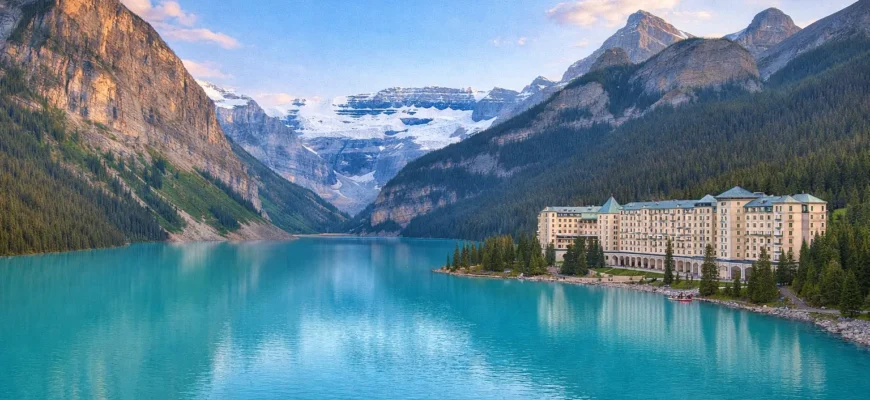
The park’s fame rests on iconic turquoise lakes formed by glacial silt suspended in meltwater. Lake Louise, named by British settler Tom Wilson in 1882, features the legendary Fairmont Chateau Lake Louise hotel positioned on the lakeshore—an image defining Canadian mountain hospitality since 1890. The lake’s intense blue-green color results from glacial flour particles refracting light wavelengths, creating a hue impossible to fully capture in photographs.
Moraine Lake, located 14 kilometers beyond Lake Louise in the Valley of the Ten Peaks, displays even more dramatic turquoise coloration and served as the image on Canada’s former CAD $20 bill. The Rockpile short trail ascends 45 minutes to commanding views overlooking the lake and surrounding peaks.
Access logistics matter significantly: parking at Lake Louise and Moraine Lake fill rapidly during peak season. Parks Canada operates shuttle bus systems from May 16 through October 13, with multiple daily departures. Reservations are essential, particularly for Moraine Lake where private vehicle traffic is restricted entirely. Alternative access via public transit from Banff townsite offers budget-conscious options.
Hiking in Banff ranges from gentle lakeshore walks to challenging alpine scrambles. The Plain of Six Glaciers trail (14 kilometers round trip) climbs from Lake Louise to a teahouse situated amid three visible glaciers. Johnston Canyon Walk (2.7 kilometers) descends through a narrow limestone canyon to striking waterfalls.
Jasper National Park: Scale, Solitude, and the Icefields Parkway
Jasper National Park encompasses 10,878 square kilometers of wilderness 240 kilometers northwest of Banff. Where Banff emphasizes dramatic individual peaks and accessible infrastructure, Jasper exudes vast mountain grandeur with fewer crowds.
The Icefields Parkway, a 93-kilometer scenic drive connecting Lake Louise to Jasper townsite, ranks among the world’s most stunning drives. The road traverses high mountain passes offering views of avalanche paths, turquoise meltwater rivers, and distant glacier-covered peaks. Multiple pullouts and trailhead access points permit photographic breaks and short walks.
Athabasca Glacier, flowing from the Columbia Icefield, permits vehicle access via specialized Ice Explorer coaches that navigate the glacier’s crevassed surface. This unique experience places visitors on the ice surface—a landscape dramatically shrinking due to climate change, with the glacier’s terminus retreating approximately 150 meters annually over the past century.
Hiking opportunities in Jasper include the Cavell Meadows trail (ascending to views of Angel Glacier) and the Sunwapta Falls trail (an easy waterfall viewpoint). Less crowded than Banff, Jasper suits travelers seeking wilderness immersion with somewhat reduced infrastructure.
Additional National Parks Worth Considering
Kootenay National Park (British Columbia) offers excellent value as a less-visited Rocky Mountain park, featuring colorful thermal pools and diverse ecosystems. The park’s Banff-to-Prince Rupert orientation provides access from two directions.
Pacific Rim National Park Reserve (British Columbia) protects temperate rainforest coastal ecology, with Tofino serving as the primary access point. The park features Long Beach, a dramatic west-facing sandy beach backed by old-growth forest.
Cape Breton Highlands National Park (Nova Scotia) protects Atlantic coastal scenery, with the Cabot Trail providing scenic road access.
Getting Around: Transportation and Road Trip Fundamentals
Canada’s vast distances—the country spans 5,900 kilometers coast-to-coast—necessitate strategic transportation planning.
Driving and Road Trips: The Trans-Canada Highway Experience
The Trans-Canada Highway (Highway 1), measuring 8,030 kilometers, ranks as the world’s longest national highway, connecting Victoria, British Columbia to St. John’s, Newfoundland. Most itineraries emphasize shorter segments rather than coast-to-coast drives.
A 20-day Trans-Canada segment covering British Columbia through Ottawa offers a comprehensive experience. This route traverses the Canadian Rockies (the most visually dramatic section), crosses prairie provinces showcasing vast agricultural landscapes, ascends to Niagara Falls, and finishes in the national capital region.
Road conditions are generally excellent on major routes like the Trans-Canada. However, mountain passes require awareness of seasonal conditions. Winter driving on passes like Rogers Pass (Glacier National Park) and Kicking Horse Pass (Yoho National Park) demands chains and experience with winter driving. Visibility changes rapidly with weather, and accidents increase substantially.
Summer driving conditions are optimal: roads are clear, passes are open, and long daylight hours extend exploration windows. Gasoline prices vary regionally, with Vancouver and Toronto maintaining higher prices than prairie regions due to regional taxation. Budget approximately CAD $0.14-0.18 per kilometer for fuel costs.
Train Travel: Scenic and Accessible Alternatives
VIA Rail operates Canada’s primary passenger rail network, with the Canadian route running Toronto-Vancouver across 4,466 kilometers—one of the world’s longest passenger trains and a bucket-list experience for many travelers.
The journey spans four days and three nights, with sleeping accommodations ranging from basic (Dayniter seats) to luxury (two-berth private sleeper cabins). The train traverses the Canadian Rockies with dedicated scenic viewing cars, and meals are included in cabin accommodations.
The Rocky Mountaineer, a luxury tourist train operating Whistler-Banff and Banff-Calgary routes, provides all-inclusive experiences with dome cars offering panoramic views and exceptional dining. These journeys emphasize comfort and scenery over transportation efficiency.
Domestic Air Travel: Connecting Major Hubs
Domestic flights bridge vast distances efficiently. Budget carriers like WestJet and Air Canada Rouge offer competitive pricing on major routes. A Vancouver-Toronto flight covers 3,300 kilometers and typically costs CAD $200-400 depending on booking proximity and season.
Major hubs include Vancouver, Calgary, Toronto, Montreal, and Halifax. Regional airports offer access to specific destinations but with reduced flight frequency and higher costs. Booking directly through airline websites or aggregator sites (Google Flights, Expedia) permits price comparison.
Suggested Itineraries for First-Time Visitors and Repeat Explorers
Strategic itineraries maximize experience density while respecting travel logistics and fatigue factors.
7-Day Classic West: Vancouver and Banff National Park
Day 1: Arrive Vancouver. Afternoon orientation to Downtown Vancouver, visit Canada Place, and waterfront exploration.
Day 2: Full day Vancouver—Capilano Suspension Bridge, Grouse Mountain gondola, or Chinatown and Vancouver Museum.
Day 3-4: Departure for Banff (12-hour drive via scenic route or 2-hour flight). Day in Banff townsite with evening exploration of Cave and Basin, legacy historic site. Optional: Johnston Canyon walk in afternoon.
Day 5-6: Lake Louise and Moraine Lake. Book Parks Canada shuttle for full-day lake exploration (30-45 minutes at each location). Afternoon hiking on Plain of Six Glaciers trail (weather permitting).
Day 7: Return travel to Vancouver (drive or fly). Evening departure or overnight recovery day depending on return flight timing.
Optimization notes: This itinerary emphasizes mountain scenery while remaining geographically compact. The drive between Vancouver and Banff includes stops at Whistler (2-hour drive from Vancouver, ideal for overnight break) and scenic viewpoints along Highway 1.
10-Day Eastern Cities: Cultural Immersion and Historic Experiences
Day 1-2: Toronto arrival and orientation. CN Tower, Distillery District walking tour, neighborhood exploration (Kensington Market, Chinatown).
Day 3: Niagara Falls (1.5-hour drive south). Boat tour at base of falls, waterfall viewpoints, and evening illumination.
Day 4: Toronto return or Ottawa transit (4-hour drive west). Parliament Hill tour, National Museum of History, Byward Market exploration.
Day 5: Ottawa day trip to Gatineau Park (cross into Quebec) for forest scenery and hiking.
Day 6-7: Montreal arrival (2-hour drive from Ottawa). Old Montreal walking tour, Mt. Royal viewpoint hike, diverse neighborhood exploration (Plateau, Mile End).
Day 8-9: Quebec City (3-hour drive northeast). Old Quebec walking tour, montmorency falls, Île-d’Orléans agricultural heritage island.
Day 10: Return to major hub (Quebec City air connections or return drive to Montreal/Toronto depending on return flight).
Optimization notes: This itinerary emphasizes Canadian history, cultural diversity, and urban experiences. The route progresses logically along Highway 401/407 and Highway 20 corridors. Winter travel to Quebec enables integrated holiday experiences and winter festival attendance.
14-Day Coast-to-Coast: Ultimate Bucket List
This comprehensive itinerary traverses multiple regions, though it demands strategic pacing to avoid excessive driving.
Days 1-3: Vancouver (as noted above).
Days 4-6: Rocky Mountain parks (Banff/Lake Louise, Moraine Lake, Icefields Parkway scenic drive to Jasper or return to Banff).
Days 7-8: Calgary or direct air transfer to Toronto.
Days 9-11: Toronto, Niagara Falls, Ottawa (as noted above).
Days 12-13: Montreal and Quebec City (as noted above).
Day 14: Return travel to departure hub.
Optimization notes: This itinerary incorporates flights between Western and Eastern Canada to manage the 3,300-kilometer distance (approximately 32-36 driving hours). Budget 3-4 nights in each region to avoid excessive hotel changes and permit deeper exploration. Consider incorporating 1-2 national park days rather than attempting comprehensive coverage.
Cultural Experiences and Indigenous Heritage: Authentic Engagement
Canada’s Indigenous heritage spans thousands of years before European arrival, reflecting diverse First Nations, Inuit, and Métis cultures with distinct languages, customs, and connections to territory. Engaging respectfully with this heritage enriches travel experiences immeasurably.
Indigenous Tourism: Ethical Framework and Best Practices
The Indigenous Tourism Association of Canada (ITAC) provides guidelines for respectful engagement emphasizing visitor education before travel, support for Indigenous-owned businesses, and awareness of historical context.
Understanding terminology matters: the term “Indian” is considered outdated and offensive. Proper terminology distinguishes First Nations (indigenous peoples with status under Canadian law), Métis (people of mixed First Nations and European ancestry with distinct culture), Inuit (Arctic indigenous peoples), and the collective term Indigenous peoples.
Recommended approaches:
Engage Indigenous guides and tour operators—these experiences provide direct economic benefits to communities while ensuring culturally authentic representation. Organizations like Destination Indigenous and Indigenous Tourism BC can identify certified Indigenous tourism operators.
Research specific communities before visiting. Each Indigenous nation possesses distinct history, contemporary circumstances, and relationship to tourism. Understanding broader context—residential school systems, land dispossession, contemporary social conditions—informs compassionate engagement and meaningful conversations.
Respect sacred sites and restricted areas. Many locations hold spiritual significance and may be restricted to community members or require ceremonial protocols. Signage typically indicates these restrictions; always ask if uncertain.
Support Indigenous artisans and vendors directly. Purchasing directly from artists ensures revenue flows to creators rather than intermediaries. Markets and craft cooperatives in major cities concentrate Indigenous artisan work.
Participate in cultural events mindfully. Many communities hold summer powwows, winter festivals, and cultural celebrations welcoming visitors. Attend with genuine interest, ask questions respectfully, and follow community guidelines regarding photography and participation.
Indigenous Food and Culinary Heritage
Indigenous peoples shaped Canadian food culture profoundly. Traditional ingredients including berries, smoked fish, game animals, and wild plants appear increasingly in contemporary Canadian cuisine.
Bannock, a simple flatbread staple among Indigenous communities for centuries, appears on menus throughout Canada. Contemporary chefs honor this heritage through modern interpretations while acknowledging cultural origins.
Visiting Indigenous-owned restaurants supports community economic development while exploring culinary traditions. Major cities feature Indigenous-operated establishments offering both traditional and contemporary interpretations of Indigenous cuisine.
Canadian Cuisine: Iconic Flavors and Culinary Experiences
Canada’s distinctive culinary identity reflects immigrant waves, regional ingredient availability, and Indigenous influences, creating comfort foods and gourmet experiences in equal measure.
Poutine: Canada’s National Dish
Poutine, Quebec’s iconic comfort food, consists of crispy French fries topped with fresh cheese curds and smothered in rich brown gravy. This seemingly simple combination achieves something transcendent—the contrast between crispy fries, squeaky cheese curds, and savory gravy creates textural complexity and satisfaction.
Originating in rural Quebec in the 1950s, poutine has achieved nationwide status as Canada’s most recognizable dish. Contemporary variations include pulled pork poutine, lobster poutine, and fusion interpretations, though purists insist on the original preparation.
Maple Syrup and Seasonal Traditions
Maple syrup, Canada’s most recognizable export after potash and minerals, appears in both sweet and savory applications. Spring maple syrup season peaks from mid-March through April when sap flows from sugar maples (Acer saccharum).
Sugar shacks, particularly concentrated in Quebec and Ontario, open during syrup season to visitors, offering traditional tapping demonstrations, fresh maple taffy rolled on snow (called “tire sur la neige”), and hearty sugar shack meals featuring crepes, bacon, and ham served with abundant syrup.
Beyond desserts, modern Canadian cuisine employs maple syrup in savory preparations—glazed salmon, maple-mustard marinades, and vegetable accompaniments showcase the ingredient’s versatility.
Iconic Desserts and Snacks
Nanaimo bars, named after British Columbia’s Nanaimo, represent Canada’s most exported dessert internationally. These no-bake treats feature three distinct layers: a chocolate-coconut-walnut base, custard icing middle, and thin chocolate ganache top. The combination of textures and flavors achieves disproportionate appeal.
Butter tarts, originating around 1900, combine a flaky pastry shell with a gooey filling of brown sugar, butter, and egg. These portable treats appear at bakeries throughout Canada and represent beloved childhood nostalgia for many Canadians.
Atlantic Canada Seafood Specialties
Atlantic Canada’s maritime heritage creates exceptional seafood experiences. Lobster rolls (served hot with melted butter or cold with mayo) epitomize Nova Scotia dining. Fresh-caught halibut, cod, and salmon appear on regional menus throughout Atlantic Canada.
Seafood chowders, featuring clams, scallops, and fish in cream-based broths, warm visitors during cooler seasons. Oyster bars concentrate in maritime cities, offering fresh-shucked oysters with regional character.
Frequently Asked Questions: Addressing Common Travel Concerns
What is the #1 tourist spot in Canada?
Both Niagara Falls and Banff National Park claim this distinction depending on visitor volume metrics. Niagara Falls attracts approximately 30 million visitors annually, primarily day-trippers from the U.S., making it statistically Canada’s most-visited natural attraction. Banff National Park, receiving 4+ million annual visitors, represents the most visited national park and arguably the most iconic scenery. For first-time visitors asking “where should I go,” Niagara Falls offers quick access from major U.S. cities, while Banff provides more immersive mountain experiences.
Do I need a visa to visit Canada from the United States?
U.S. citizens are exempt from visa requirements and the eTA system due to their status as lawful permanent residents of North America. A valid U.S. passport is sufficient for air travel; a passport card or enhanced driver’s license is acceptable for land/sea entry.
Is Canada expensive to visit?
Canada ranks as moderately expensive compared to global destinations, more affordable than Scandinavia or Switzerland, comparable to the U.S. overall, and more expensive than Mexico or Central America. Regional variations matter significantly—Western Canada (BC/Alberta) is notably more expensive than Atlantic Canada (Nova Scotia/NB). Budget travelers can minimize costs through camping, grocery shopping, and shoulder-season travel, reducing daily budgets to CAD $50-75. Mid-range comfort costs CAD $150-200 daily.
What should I pack for a trip to British Columbia?
British Columbia’s climate varies by subregion. Coastal areas (Vancouver/Tofino) experience mild, damp conditions—pack waterproof jackets and layers. Rocky Mountain regions experience temperature swings—mornings start cold (5-10°C), while afternoons warm considerably. Pack moisture-wicking base layers, fleece midlayers, waterproof outer shell, and quality hiking boots. Summer requires sunscreen and sunglasses due to intense UV at elevation. Winter (Nov-March) in mountain regions demands insulated jackets, thermal layers, and potentially specialized winter hiking boots.
Embark on Your Canadian Adventure
Canada awaits with landscapes of breathtaking scale, cultural encounters that transform perspectives, and outdoor adventures matching any destination globally. Whether hiking past turquoise lakes in Banff, exploring Indigenous heritage respectfully, savoring poutine in Quebec, or chasing northern lights above Arctic landscapes, Canada delivers experiences that resonate long after return travel.
This guide has equipped you with the strategic knowledge needed to plan effectively. The seasonal timing framework helps optimize weather and costs. Regional summaries guide destination selection. Practical logistics reduce uncertainty and complications.
Your Canadian adventure begins with the decision to commit. Consider your timeline, budget constraints, and primary interests. Develop an itinerary with realistic pacing—rushing diminishes the experience. Book accommodations and transportation in advance, particularly for peak season travel.
The Canadian landscape, diverse communities, and genuine hospitality await your arrival. Plan strategically, travel respectfully, and create memories that define your sense of adventure and connection to this remarkable country.