Wholesale disposable slippers: smart bulk solutions for hotels, spas & salons
Understanding the surging demand for hygienic, cost-effective footwear solutions across hospitality and service industries. For hotels, spas, salons, and healthcare facilities, disposable slippers represent more than convenience—they’re essential tools for maintaining standards while optimizing operations.
Why disposable slippers? Solving real problems
Hygiene first: eliminating cross-contamination
Modern establishments face unprecedented pressure to maintain sterile environments. Disposable slippers provide a critical barrier against bacterial and fungal infections, particularly important in healthcare settings where medical facility slippers help prevent contamination between patients. In spas and salons, where clients frequently go barefoot for treatments, disposable footwear eliminates the risk of spreading infections through shared surfaces.
Guest comfort & convenience: essential amenity
Today’s travelers expect premium amenities that signal care and attention to detail. Disposable slippers serve multiple functions: protecting feet from cold floors, providing comfort during relaxation, and offering convenience for guests who prefer not to walk barefoot. Wedding venues and event planners increasingly provide disposable slippers to ensure guest comfort during ceremonies and receptions.
Cost-effective operations: bulk advantage
Financial analysis reveals disposable slippers eliminate ongoing costs associated with reusable footwear. Hotels save significantly on laundry expenses, replacement costs, and labor hours required for cleaning and maintenance. The total cost of ownership proves substantially lower than traditional alternatives when accounting for eliminated laundry, replacement, labor, and inventory management.
Practicality: temporary use solutions
Disposable slippers excel in environments requiring quick turnover and consistent hygiene standards. In pedicure salons, foam flip-flops allow easy sanitization between clients while providing essential foot protection. Hospital settings benefit from lightweight, non-slip designs that reduce fall risks while maintaining sterile conditions.
Finding your perfect fit: types & uses
By setting: matching environment to function
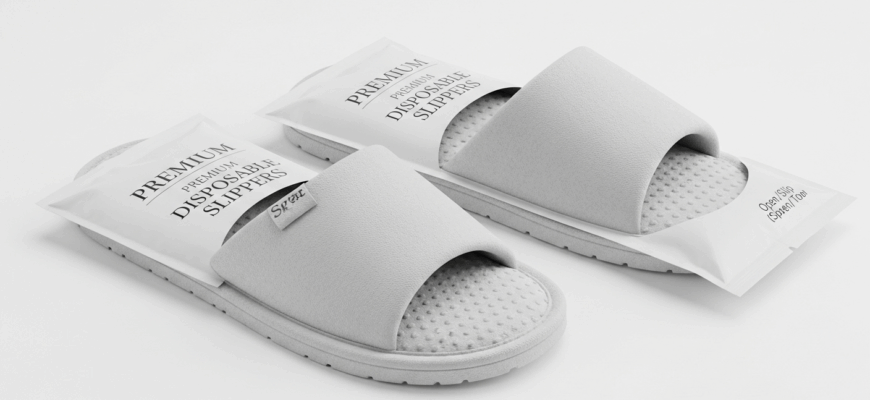
Hotel & hospitality: Classic comfort with branding opportunities through closed-toe designs for comprehensive coverage. Key features include one-size-fits-most length, individual packaging, non-slip soles, and customization options.
Spa & salon: Pedicure-specific solutions with open-toe designs allowing treatment accessibility. Waterproof EVA foam flip-flops provide ideal solutions with color options and slip-resistant soles.
Medical & hygiene: Hospital-grade protection featuring closed-toe designs with enhanced grip patterns and hypoallergenic materials meeting infection control standards.
Home & events: Welcoming guests with comfortable designs that protect floors at weddings and gatherings.
By style & material: design considerations
Open toe vs. closed toe: Open-toe offers breathability and easy sizing while closed-toe provides complete protection and warmth. Each serves distinct environments from spa treatments to upscale venues.
Flip flop vs. slipper style: Flip-flops excel in pedicure and wet environments while traditional slippers suit hotels and healthcare settings requiring enclosed protection.
Material selection guide:
– Non-woven fabric for cost-effective hospitality
– EVA foam for waterproof spa/medical use
– Terry cloth blends for premium comfort
– TPR soles for maximum slip resistance
Buying smart: wholesale procurement guide
Bulk purchasing economics
Wholesale delivers substantial cost advantages through volume pricing structures. Understand tiered pricing models and minimum order quantities ranging from basic styles to custom-branded options.
Critical specifications checklist
Evaluate length/width dimensions, sole thickness, material composition, and slip resistance ratings. Packaging method (individual vs bulk) significantly impacts hygiene presentation.
Supplier selection beyond marketplaces
Assess manufacturing credentials, customization capabilities, shipping reliability, and quality consistency. Compare geographic options balancing cost against delivery speed and communication ease.
Custom branding for professional image
Explore logo application methods from screen printing to embroidery. Consider design limitations, minimum quantities, and extended lead times for branded solutions.
Quality-cost balance strategies
Test samples for sole attachment integrity and material consistency. Establish graduated ordering patterns and track performance metrics while developing long-term supplier relationships.
Top applications & niche solutions
Pedicure perfection standards
Salons require specialized footwear meeting strict hygiene protocols. EVA foam flip-flops dominate with chemical resistance, easy sanitization, and cost-effective replacement for high-volume usage.
Spa sanctuary essentials
Premium terry cloth or cotton blend slippers provide post-treatment comfort while maintaining hygiene. Closed-toe designs with cushioning and individual packaging enhance luxury experience.
Hotel hospitality implementation
Strategically position disposable slippers as signature amenities through room placement and welcome packages. Enhance guest experience with comfort, hygiene assurance, and take-away value.
Event footwear solutions
Provide guest comfort during weddings and corporate events where extended standing or dancing occurs. Disposable options protect venue floors while ensuring accessibility.
Hygiene-critical environments
Healthcare facilities require anti-microbial materials and slip-resistant soles. Applications extend to gym showers, community pools, and elder care facilities needing contamination control.
Getting started: actionable ordering steps
Calculating your requirements
Estimate quantities based on:
– Hotel occupancy rates and room types
– Salon treatment volumes with safety buffers
– Healthcare patient flow patterns
– Event guest counts with contingency planning
Essential sampling protocol
Test 5-10 pairs per style through real-world scenarios. Assess durability, comfort, packaging, sizing, and construction quality before bulk commitments.
Understanding wholesale terms
Navigate minimum order quantities for different styles. Factor logistics including lead times, shipping costs, import duties, and storage requirements. Negotiate payment terms and quality guarantees.
Reliable supplier selection
Evaluate manufacturers based on production capacity, customization services, and geographic coverage. Verify service quality through response time, sample policies, and after-sales support. Avoid suppliers with unusually low prices or poor communication practices.
Strategic procurement conclusion
The disposable slipper market offers substantial opportunities for businesses prioritizing hygiene, guest comfort, and operational efficiency. Success depends on matching specific needs with appropriate products while establishing reliable supplier relationships. Quality sampling, careful supplier evaluation, and accurate demand forecasting ensure optimal outcomes for any bulk purchasing initiative.
Smart procurement focuses on long-term value rather than minimum initial cost, balancing quality standards with budget constraints. Whether serving hotel guests, spa clients, or healthcare patients, the right disposable slipper solution enhances user experience while supporting operational excellence.